In the war for talent, companies that combine strategic thinking with technology win.
A McKinsey & Company study revealed that up to 30% of critical roles in many organizations remain unfilled with truly qualified professionals, directly impacting business results. Without a modern applicant management system, companies risk losing top talent, while automated solutions enable faster, more accurate candidate sourcing, boosting HR team efficiency through analytics, AI, and process optimization.
According to McKinsey, automation could take over more than 21% of working hours in the U.S. economy by 2030 — and this trend is mirrored in European markets. Traditional hiring methods are no longer enough: businesses need systems that allow them to quickly find, screen, and engage the best candidates. This is where an ATS (Applicant Tracking System) comes in — a tool that transforms recruitment from a lengthy, sometimes chaotic process into a structured, efficient talent acquisition strategy.
What Is an ATS for Recruitment?
An ATS is specialized software designed to automate and optimize the entire hiring process — from receiving resumes to making the final hiring decision. This candidate tracking system organizes large volumes of applications, automatically screens candidates based on set criteria, facilitates smooth communication among all stakeholders, and provides real-time analytics. As a result, recruitment becomes a transparent, measurable, and manageable business function that directly impacts competitiveness by reducing time-to-hire, lowering costs, and attracting candidates who truly fit the role.
What Is a Cloud-Based ATS?
A cloud-based ATS is an online applicant tracking system delivered as SaaS (Software as a Service), meaning it’s subscription-based and accessible via the internet without local installation. Users get full recruitment functionality anytime, anywhere, along with automatic updates, integrations with other business tools, and secure data storage. This approach makes hiring flexible, scalable, and cost-effective.
Key Functions of ATS Software and How They Compare to Manual Hiring
Modern ATS (Applicant Tracking System) platforms perform critical tasks that ensure efficiency across all recruitment stages:
- Centralized hiring process — all information about vacancies, candidates, and selection statuses is stored in a single platform, eliminating confusion in spreadsheets and email threads.
- Automation of routine tasks — sending emails, reminders, scheduling interviews, and other repetitive operations are performed automatically, freeing recruiters’ time for strategic tasks and direct communication with candidates.
- Transparent communication among participants — ATS ensures shared access to information for recruiters, HR directors, and hiring managers, speeding up decision-making.
- Analytics and performance evaluation — the candidate management system provides data on time-to-fill, the most effective candidate sources, rejection rates, and more, enabling fact-based decisions rather than intuition.
- Compliance with security standards — ATS for recruitment stores candidates’ personal data securely and ensures compliance with international standards such as GDPR (General Data Protection Regulation). This means the company protects itself from data leaks, fines, and reputational risks, while candidates feel trust from the very first stage of hiring.
Manual vs. ATS with AI Tools:
| Stage | Manual Process | ATS with AI |
| Job Posting | 1–2 days to prepare and publish | 5–10 minutes with templates and auto-posting |
| Resume Screening | 1–2 weeks manually reviewing hundreds of resumes | Automated parsing and filtering in minutes |
| Candidate Selection | 3–7 days | Instant AI-driven recommendations |
| Interview Scheduling | 2–5 days of calls and emails | Auto-scheduler sets interviews in minutes |
| Final Decision | 1–3 days of discussions | Predictive analytics supports quick decisions |
| Full Cycle | 3–5 həftə | 4–7 days (depending on the vacancy and scale) |
Efficiency in Figures: How an ATS Saves Time, Optimizes Recruiter Work, and Reduces Company Costs
The longer a position stays open, the more it can cost your business — and here’s why:
- Lost opportunities — Projects may be delayed, product launches postponed, and the company loses potential revenue.
- Employee overload — The team takes on extra responsibilities, reducing productivity and increasing the risk of errors and burnout.
- Direct financial costs — Additional expenses for candidate sourcing, job boards, or recruitment agencies.
- Loss of competitive advantage — Slow hiring gives competitors the chance to bring products to market faster and attract top talent.
A modern ATS in HR, enhanced with artificial intelligence, helps minimize these losses. According to Talent Business Partners (an international platform specializing in building trust and transparency in the recruitment and HR industry), companies that have integrated an ATS into their hiring process reduce recruitment cycles by an average of 85%. This means positions that previously took weeks to fill are now closed within just a few days. Additionally, the average time-to-fill decreases by 25%, which is especially critical in today’s highly competitive market for qualified professionals.
However, speed is not the only measure of success. An applicant tracking system is also a tool that helps improve employee retention during the first year by 30%, as AI algorithms within the system enable more accurate matching of candidates who truly align with the company culture and job requirements.
Another key feature of HR ATS systems is predictive analytics, which allows companies to analyze data from previous successful hires, identify patterns, and determine candidates with the highest potential. According to industry experts, this makes it possible to:
- Reduce time-to-fill by up to 50%
- Lower recruitment costs by up to 30% through:
- Automation of routine processes (email distribution, interview scheduling, reminders, etc.), which reduces the need for additional HR resources.
- Optimization of candidate sources and allocation of resources to the most effective channels — the recruitment automation system analyzes which platforms deliver the highest-quality candidates and focuses budgets and efforts there, reducing expenses on paid job postings and recruitment agencies.
- More accurate candidate selection from the start, minimizing repeat hires and costs associated with ineffective recruitment.
- Improve candidate quality and increase diversity— AI algorithms analyze not only experience and skills but also the success rate of candidates in similar roles, allowing companies to select those most likely to succeed. In addition, candidate tracking systems help eliminate bias in the selection process by identifying candidates with diverse backgrounds, contributing to a more equitable and inclusive team composition.
Thus, for businesses, an ATS system is no longer just a tool for automation. It becomes an asset that directly impacts company profitability, strengthens the employer brand, and ensures uninterrupted growth.
Functionality of a Modern ATS System: The Example of SMART HCM & LMS
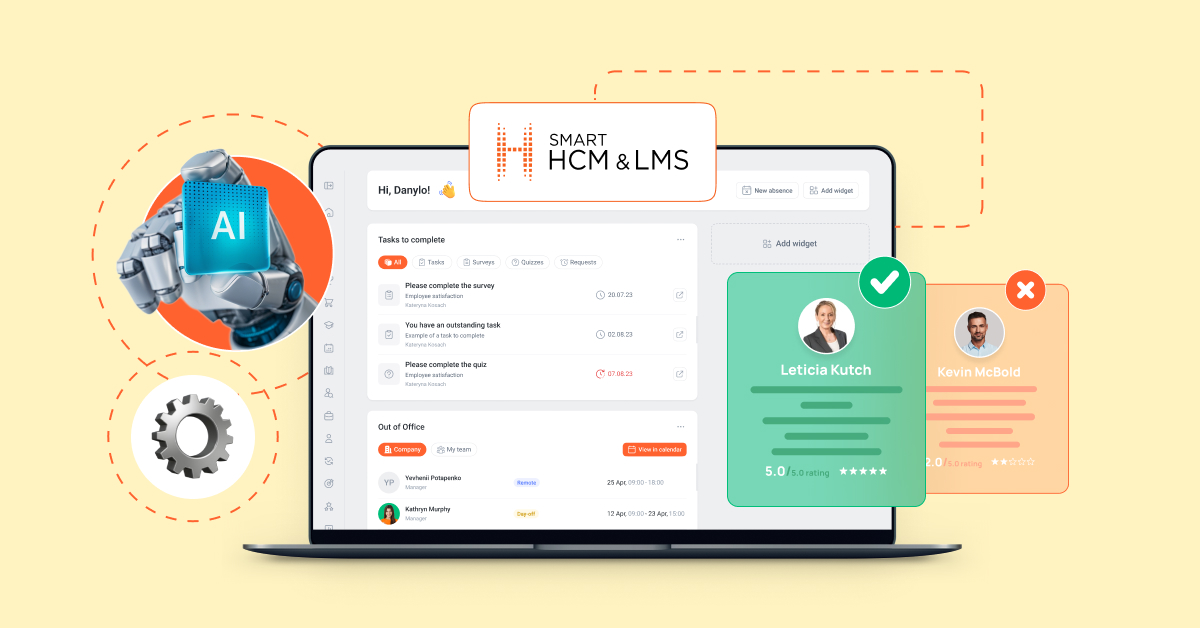
The role of modern applicant tracking system software can be fully handled by the SMART HCM & LMS platform, which includes dedicated modules for managing recruitment and all HR processes. This comprehensive solution from SMART business, built on Microsoft technologies, combines tools for talent acquisition, assessment, and retention in a single system, ensuring fast, transparent, and controlled hiring.
Let’s take a closer look at the recruitment module, which provides:
- Faster closure of more vacancies in shorter timeframes — integration with job sites (Indeed, robota.ua, grc.ua, WORK.ua, OLX) accelerates job posting and response processing, boosting HR department productivity.
- Transparent monitoring of hiring results at every stage — an automated recruitment funnel displays candidate progress in real time. Candidate tracking software gives HR management a clear view of process efficiency.
- Data-driven decision-making — HR analytics tools allow you to evaluate recruitment performance, quickly identify bottlenecks, and make strategic decisions based on up-to-date data.
Key Features of the SMART HCM & LMS Recruitment Module:
- Job and application management — all job postings, applications, and selection statuses are stored in one place. This allows quick access to information, tracking candidate progress, and avoiding data duplication, making the hiring process transparent and controlled.
- High-volume recruitment — working with a large number of candidates simultaneously using applicant resume tracking systems saves recruiters time and ensures fast initial engagement without manually entering each contact.
- Candidate database — stores verified and promising specialists for reuse in future hiring, reducing the time needed to search for and evaluate new candidates.
- Resume parsing from specialized and general platforms — the recruitment system automatically collects and sorts resumes from various sources, quickly separating relevant applications from less suitable ones.
- Creating an ideal candidate profile for each position — SMART HCM & LMS allows precise definition of key competencies, experience, and skills required for a specific role, improving the quality of selection.
- Recruitment funnel management and result tracking — the system helps monitor candidates at every stage, stores assessment and interview results, ensuring transparency and greater control over recruitment processes.
- Automated messaging and interview invitations — the platform enables quick communication with candidates about application status or interview scheduling, saving recruiters’ time.
- Complete communication history — all contacts and correspondence with candidates are stored in the application tracking system, making it easy to retrieve information and maintain professional relationships.
- Visualization of hiring results — interactive dashboards and reports help quickly analyze recruitment efficiency, identify weak points in the process, and optimize HR team performance.
- Analytics of talent acquisition channels — the system shows which candidate sources are most effective, allowing HR teams to optimize budgets and efforts.
More About the HR Analytics Module
The HR Analytics module in SMART HCM & LMS enables building a data-driven management culture:
- Visualization and automated reporting — interactive dashboards powered by Microsoft Power BI allow you to view all data in a clear format, automatically generate reports, and reduce time spent on routine analytics.
- Flexible filtering and drill-down — users can quickly sort information by department, position, age, training level, or education, and explore details at any level directly on the dashboard without additional IT requests.
- Employee turnover monitoring — the platform tracks attrition rates for selected periods and segments, helping predict risks and identify the reasons for employee turnover in time.
- Unified real-time view of business metrics — managers gain quick access to key KPIs and HR process performance indicators anytime, from anywhere.
- Extensive integration capabilities — the module connects to various data sources: SMART HCM & LMS, ERP, Excel, MS SQL, PostgreSQL, Oracle DB, and more. Open and standardized REST APIs ensure easy integration with other corporate systems.
Thus, SMART HCM & LMS makes recruitment fast, transparent, and manageable. It’s no longer just an ATS platform — it’s a strategic tool for building strong teams and competitive businesses.
The Role of AI in ATS and the Advantages of Intelligent Recruitment Systems
Modern ATS systems are evolving from simple process automation to intelligent decision support. Artificial intelligence (AI) has become an essential tool in the war for talent, delivering:
- Faster candidate screening — studies show that using AI reduces the time for in-depth resume review by up to 75%. This means faster shortlisting and lower costs for filling positions.
- Significant reduction in time-to-hire — a 2025 survey reports that 78% of companies that implemented AI in their talent acquisition processes reduced time-to-fill by an average of 40%, with some organizations achieving reductions of up to 85%.
- Financial benefits — a vacancy with an annual salary of €76,336.81 costs a business about €290 per day when unfilled. Thanks to AI technologies that cut hiring time from 45 to 25 days, companies save more than €5,700 per position.
- Higher return on investment — according to Talent Business Partners, citing Deloitte research, predictive analytics powered by AI technologies increases ROI in talent acquisition by 79% compared to traditional methods.
How AI Is Implemented in SMART HCM & LMS
In Release 26 of the SMART HCM & LMS platform, a number of AI-based features were introduced that fundamentally change the approach to recruitment:
- Intelligent resume analysis — the built-in AI automatically evaluates CVs against the job profile, assigns a score from 0 to 100, and suggests personalized interview questions focused on actual competency gaps.
- Automatic recognition and profile completion — the system extracts key information from resumes (contacts, experience, education, skills) and fills in the fields automatically, minimizing manual work and reducing the risk of human error.
- Objectivity and standardized evaluation — AI helps eliminate subjectivity by ensuring consistent criteria for all candidates and transparency in decision-making.
- Support for high-volume hiring — ATS in recruitment helps handle large volumes of candidates simultaneously, quickly filtering out irrelevant profiles and focusing on the most suitable specialists.
SMART HCM & LMS aligns with global trends in implementing artificial intelligence in recruitment, combining technological efficiency with human expertise and the value of a personalized approach to every candidate.
Who Works in an ATS Platform and How HR Teams Collaborate Within It
HR ATS platforms like SMART HCM & LMS are designed for collaborative work among all participants in the recruitment process. Multiple roles can work in the system simultaneously, each with clearly defined permissions and access levels:
- Recruiters— responsible for sourcing and selecting candidates, processing applications, and initial communication. SMART HCM & LMS allows them to manage all applications centrally, automate routine tasks, and track the progress of each candidate.
- Talent Sourcers— specialists in talent acquisition use applicant tracking software to monitor candidate sources, parse resumes, and build a database of promising professionals. The ATS helps quickly assess candidate relevance and forward them to recruiters for further evaluation.
- Hiring Managers— department heads gain access to candidates for their open positions, can review resumes, schedule interviews, and leave comments in the system. This accelerates decision-making and reduces time-to-fill.
- HR Directors and HR Department Heads— have full visibility into recruitment processes, can monitor team performance, analyze metrics, and implement improvements based on SMART HCM & LMS analytics.
- System Administrators— configure access rights, integrations with job boards and other systems, and ensure the platform operates correctly. In SMART HCM & LMS, this role doesn’t necessarily require a dedicated technical specialist — thanks to an intuitive, user-friendly interface, administration can be handled by any HR team member or even a line manager.
How to Know Your Company Needs an ATS and How to Choose the Right One
Delays in hiring, lost candidates, endless spreadsheets, and disorganized communication with candidates and among stakeholders — all of these are signs that your recruitment process needs automation through an Applicant Tracking System (ATS).
Key signs indicating that it’s time to implement an applicant tracking system for recruiters:
- Your company is growing rapidly, and the number of open positions keeps increasing.
- Recruitment takes too much time due to manual processes.
- There is no clear analytics or transparent reporting on hiring effectiveness.
- Candidate information is scattered across different channels and tools.
- It’s difficult to ensure quality communication between recruiters, HR, and hiring managers.
How to choose a system that fits your needs:
- Assess the scale and specifics of your business — does the ATS support high-volume hiring, specialized roles, and integration with other HR and business solutions?
- Check the interface simplicity — the system should be intuitive for both recruiters and line managers.
- Verify analytics and reporting customization capabilities.
- Evaluate integration options — can the ATS easily integrate with your existing tools (ERP, CRM, payroll and accounting systems, job boards) to create a unified work environment?
- Ask about support and product development — it’s important that the vendor provides ongoing assistance after implementation.
SMART HCM & LMS meets all these critical criteria: modern recruitment tools, artificial intelligence, flexible analytics, job board integrations, and a simple interface suitable for your entire team.
Want to implement an ATS tailored to your company’s needs? Submit a request, and SMART business experts will select the optimal solution for your business!