Have you ever thought about how HR processes are comparable to a star cluster – a group of stars that are held together by gravitational interactions, forming stable structures? In these clusters, stars exchange matter and energy, and gravitational fields affect the speed of rotation of stars and their evolution, during which stars change their composition or merge with each other into new cosmic bodies. Thus, stars interact in a complex and dynamic way, like how employees of a company influence each other, performing their role in their own system.
Automation, on the other hand, unites different HR processes. It ensures the harmonious work of the team and reduces chaos in the organization, allowing each employee to produce their portion of light on the way to the key goals of the company. Just as star clusters form stable systems in space, automation of HR processes creates a harmonious environment for business growth and development. In this article, we outline what results to expect from such a transformation and what metrics can be used to measure the effectiveness of implementation.
Benefits of HR process automation based on the example of success cases of world-famous companies
Automation of the HR industry today is not just a trend, but a necessity, behind which there are specific needs and results. Mastercard automated a number of its HR processes in order to build more seamless interaction: both for candidates and internal teams. The results speak for themselves. The implementation involved the use of real-time analytics tools and artificial intelligence technologies. Thanks to this, Mastercard automated interview planning, since previously this process was labor-intensive and performed manually. Automation made it possible to plan interviews much faster: according to data cited in Forbes, the time for organizing interviews was reduced by as much as 85%. Automation minimized the administrative burden on HR teams and created comfortable conditions for focusing on the company’s strategic tasks.
In addition, Mastercard created an integrated career site that interacts with the company’s CRM system. This implementation has automated the collection and processing of candidate data, providing a complete understanding of their experience. By combining more than 75 local career sites into one, the system increased site visitor retention by 60% and candidate loyalty by 27%.
At the same time, automated recruiting campaigns have helped Mastercard create more personalized and targeted interactions with its candidates, which has accelerated the process of their acquisition and hiring, namely: from less than 200 hires in 2021 to almost 2,000 in 2023.
Thanks to talent analytics tools, the company was able to collect and analyze data from the entire candidate journey in real time, which allowed the brand to quickly adapt to changes in the labor market. As a result, in just one year, the company has grown its talent community from less than 100 thousand to more than 1 million profiles. Impressive, isn’t it?
Another company that not only identifies itself as an international trendsetter of innovations, but also implements automated solutions in its own business processes is Microsoft. The company actively uses artificial intelligence to automate its HR processes to make them more efficient and convenient for employees. The use of artificial intelligence technologies allows Microsoft to quickly find and hire talent, automate the processes of resume selection, interview planning and preliminary analysis of candidates. This approach reduces the time for hiring and ensures more accurate selection. After all, AI algorithms can analyze huge amounts of data, effectively predicting the suitability of candidates for open positions.
Thanks to automated onboarding, new employees receive individual adaptation plans based on an analysis of their needs and recommendations for successful integration into the company. AI-based technologies allow analyzing employee behavior patterns, their activity and engagement. With such tools, Microsoft HR specialists can more easily anticipate possible risks of dismissal or decreased productivity. Thanks to this, HR teams can make timely strategic decisions. In addition, the use of chatbots allows them to respond to employee requests faster and solve problems without human intervention. This level of automation significantly reduces the workload of HR specialists, allowing them to focus on direct work with talent.
Microsoft also pays great attention to the ethical use of AI in HR. After all, it is important for the company to ensure data security and avoid possible biases in processes related to personnel. Therefore, the company develops its models taking into account confidentiality and concern for the “ecology” and security of business processes.
Another example of effective automation is Google cases. The company’s HR processes are aimed at facilitating the performance of routine tasks, allowing people to focus on creative and strategic work. In its approaches, Google seeks to reduce the administrative burden and create favorable conditions for the self-realization of employees. That is, the key principle is to find a balance between the automation of routine processes and providing opportunities for people to focus on more valuable and meaningful tasks.
Google uses a special platform to perform repetitive and monotonous tasks, such as scheduling meetings, filling out forms, and administration. This allows employees to spend more time on more important tasks, such as developing strategies and creative projects. Google optimizes its processes so that automation facilitates the performance of peripheral tasks, leaving specialists enough time for intellectual and complex work.
The company uses a proprietary solution to analyze a huge number of candidates, which allows it to find the most relevant specialists for open positions. While it used to take a lot of time, now the process takes a few minutes. Thus, the system provides recruiters with more time for personal interaction with candidates. In addition, the solution helps collect and summarize feedback on candidates from other employees, facilitating the assessment process during onboarding. Automation accelerates the adaptation of new employees, providing them with the necessary information for faster inclusion in the work and adjusts their skills and experience to relevant career goals.
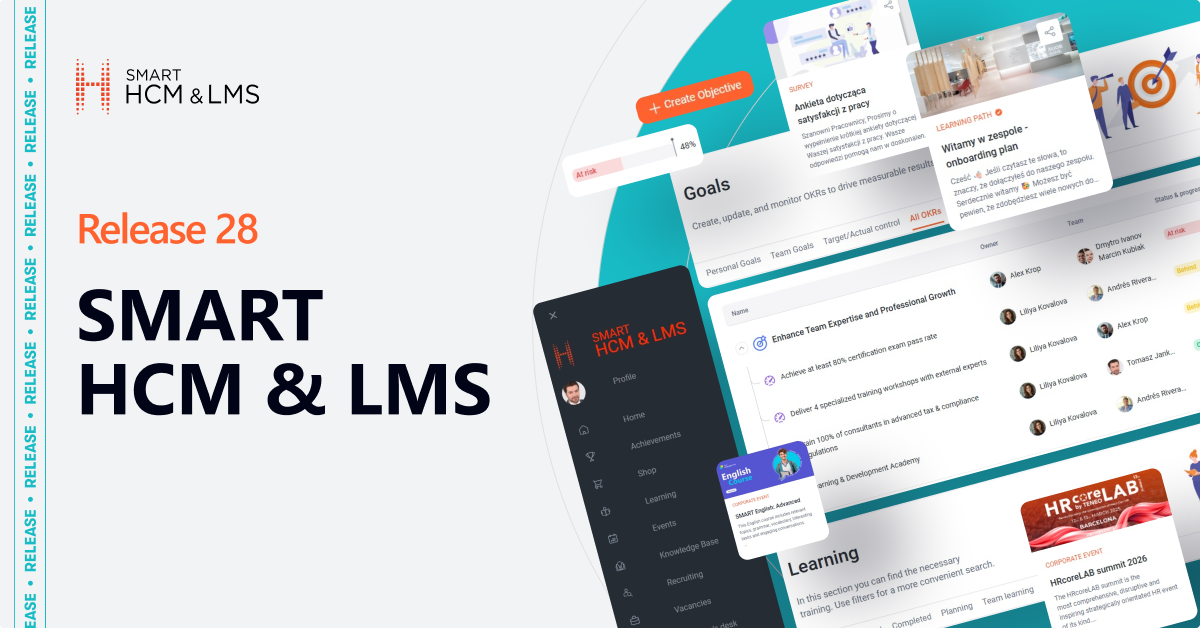
As we can see, technological enhancement of HR processes is the key to increasing the efficiency of human capital management, optimizing time for routine tasks and providing a more personalized approach to employee development. SMART HCM & LMS is exactly the solution that combines all the necessary tools to obtain the above benefits in one HR ecosystem.
What metrics are affected by HR process automation solutions?

HR process automation has a significant impact on key metrics that determine the efficiency of a company. Let’s take a closer look at them.
- Time-to-Fill – reduction in the time it takes to fill vacancies. This metric measures how much time passes from the opening of a vacancy to the moment it is filled. Automation saves up to 26% of HR hours by speeding up routine tasks such as resume processing, interview scheduling, document management, etc. Perhaps due to the use of online tools for resume screening, automation of communication with candidates, etc.
- Cost-per-Hire – a metric that reflects the total costs associated with hiring a new employee, such as advertising vacancies, interview costs, using job boards, etc. For example, SMART HCM & LMS has a recruiting module that provides mass recruitment via chatbots, fast parsing of resumes on various resources, convenient management of the employee selection funnel, automation of mailings and tools for HR marketing campaigns. As a result, you can save on advertising vacancies, recruiter services, interviews and other expenses related to hiring. According to Financesonline, automation of talent management allows companies to reduce hiring costs by up to 17%.
- Time-to-Productivity – shows how much time it takes new employees to achieve maximum productivity. Thanks to the onboarding module in SMART HCM & LMS, this figure can be significantly reduced. The module automates the assignment of adaptation plans, online testing, tools for tracking training progress and immersion in company processes without involving HRs.
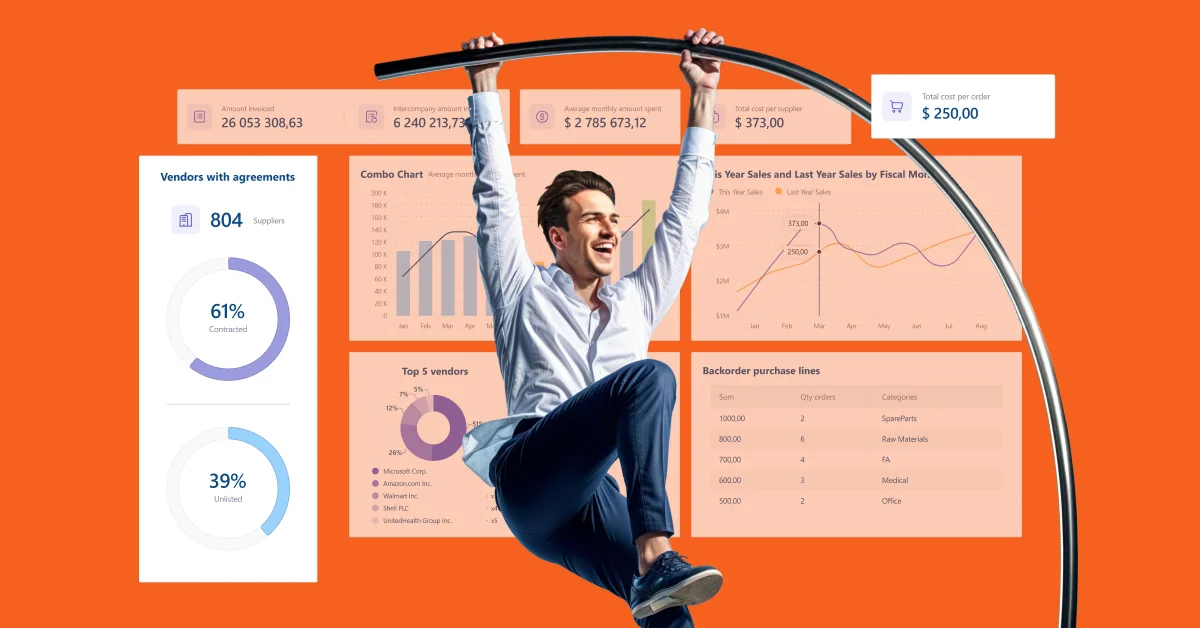
- Employee Turnover Rate – a metric that measures the percentage of employees leaving the company within a certain period. A study by MCKinsey showed that companies that actively use people analytics see an 80% increase in hiring efficiency, a 25% increase in business productivity, and a 50% decrease in turnover. SMART HCM & LMS provides powerful tools for automating business analytics based on Microsoft Power BI, allowing you to build effective workflows based on accurate data.
- Training Effectiveness – this metric helps you understand how effective training programs are, for example, based on the percentage of successfully completed tests and a reduction in the time it takes to complete training. In general, developing talent potential is an important investment in the future success of a company. The skills that a person receives directly during work have a significant impact on their career growth and income level during their lifetime. MCKinsey calculated that 46% of the income earned by a person during their lifetime is provided thanks to the skills acquired during the work process. At the same time, the survey results published in the same study showed that 46% of respondents note a lack of time to develop their skills and potential. Another 20% feel insufficient support in this matter from the company. Another 20% complain about a lack of resources for effective training and development.
The implementation of SMART HCM & LMS helps to eliminate the above-mentioned negative factors. The system allows you to organize the learning process so that employees have access to materials from anywhere at a time convenient for them. In addition, tools for monitoring progress and evaluating results allow managers to track employee development and effectively manage the company’s talent. The solution reduces the cost of external training and provides access to modern educational technologies in one digital environment.
And these are not all the metrics that clearly demonstrate the effectiveness of HR process automation. This includes a reduction in labor costs for operational tasks, a reduction in staff turnover, and an increase in employee satisfaction overall.
There are also more specialized and narrow-profile metrics that help to evaluate the effectiveness of automation on human capital management in even more detail:
- First Contact Resolution Rate – a metric that can be found more often in customer service analytics but is also quite relevant for evaluating HR processes. Just as customers expect their problems to be resolved the first time they contact support, company employees expect prompt and accurate assistance from HR. Automated self-service systems help the HR department respond to employee requests (about salaries, vacations, bonuses, and other organizational issues) faster, solving them at once.
- Employee Engagement Index – this indicator measures the degree of employee engagement and satisfaction with their work. It is automated training systems, self-service portals or process gamification tools that improve the engagement of specialists through ease of use, timely communication and interactive employee motivation opportunities.
- Recruitment Funnel Conversion Rate – this metric measures how effectively candidates go through the stages of a company’s recruitment: from applying to starting work. Process automation will significantly increase this indicator due to greater accuracy and speed in selecting relevant candidates.
In today’s uncertain environment, many companies may experience strong pressure due to the discrepancy between the developed business process management models and market realities. According to a Gartner survey, 56% of HR managers admit that their HR strategies do not yet meet current and future business requirements. The room for error is shrinking, as is the time to make important decisions. Therefore, it is important for leaders to focus on improving efficiency, optimizing key processes and automating resource management, including human capital. After all, people are the engine of all vital cycles of an organization. Therefore, the transition from traditional talent management methods to automated modern systems such as SMART HCM & LMS can be a “quantum leap” that will take your company to new heights of success.