According to the Deloitte Global Human Capital Trends 2026 report, seven out of ten executives acknowledge that workforce adaptability and an organization’s ability to rapidly reallocate resources have become key drivers of business competitiveness. Increasingly, organizations compete not only through their products but also through how effectively they can manage people, skills, and potential in real time.
At the same time, McKinsey research shows that productivity losses within organizations often remain invisible to management. These losses typically stem from three major gaps: employees lacking the required skills, low engagement, and inefficient use of working time. As a result, even high-performing teams can lose a significant share of their potential if talent management is not approached systematically.
This is why talent management has evolved into a strategic business function. Modern talent management encompasses the entire employee lifecycle — from recruitment and onboarding to development, performance management, and the retention of high-value employees. Organizations that build an integrated talent management system, rather than treating each process separately, gain a clear advantage in efficiency, agility, and scalability.
What is talent management, and why is it more than recruitment?
Talent management is not simply about filling vacancies or conducting one-off hiring campaigns. It is a comprehensive approach to managing people throughout the entire employee lifecycle — from the first interaction with a candidate to their growth within the organization and preparation for future roles.
Simply put, talent management answers one of the most important business questions: How can an organization maximize the potential of its employees and retain that value over the long term?
Traditionally, the talent management lifecycle consists of several interconnected stages:
- Talent attraction and recruitment — identifying and hiring candidates who fit not only the current role but also the organization’s long-term business needs.
- Onboarding and integration — helping new employees quickly become productive members of the organization and integrate into its culture.
- Learning and development — systematically closing skill gaps and building new competencies.
- Performance management — regularly evaluating performance and adjusting objectives.
- Employee engagement and retention — creating an environment where employees remain motivated, engaged, and committed.
- Succession planning — preparing internal talent to fill critical roles in the future.
Importantly, these stages do not exist independently. Together, they form a unified talent management system in which every element influences the others. For example, ineffective onboarding inevitably reduces employee engagement, while insufficient development opportunities eventually lead to declining performance — even among high-performing employees.
Organizations that treat talent management as a strategic management discipline rather than simply a collection of HR operations approach these processes differently. Instead of reacting to problems after they arise, they build a model in which:
- recruitment is aligned with long-term business objectives
- employee development directly supports organizational performance
- internal talent becomes the primary source for filling key positions
In such organizations, talent management becomes an integral part of business strategy rather than merely an HR function. As a result, companies gain greater control over key HR and business metrics — they can better manage turnover risks, maintain team performance, and make people-related decisions based on data rather than intuition alone.
Key processes of strategic talent management
If we compare a business to a sports team, success depends on much more than recruiting talented players. Equally important are how quickly newcomers adapt, whether they continue to develop their strengths, how effectively they collaborate with teammates, and whether they see a long-term future within the organization. That is why talent management consists of a series of interconnected processes that support employees throughout their entire journey with the company.
Talent attraction and recruitment: finding high-value candidates
Today’s competition for top talent is every bit as intense as the competition for customers. As a result, effective recruitment begins long before a vacancy is opened. An organization’s employer reputation, transparent corporate culture, and compelling employee value proposition all play a critical role. A strong employer brand helps create a positive perception among prospective candidates while reducing the time required to attract qualified professionals.
Equally important is the way candidates are evaluated. Companies increasingly assess not only professional experience but also soft skills, learning agility, adaptability, and cultural fit. This broader approach makes it easier to identify people who are likely to succeed not only today but also in the future.
In practice, however, attracting top talent cannot be scaled through manual effort alone. As organizations grow, they need transparent management of the entire recruitment process. This is where HRM, HCM, and ATS solutions come into play. These systems automate routine recruitment activities, track candidate progress, collect data for analytics, and enable faster hiring decisions. As a result, recruitment becomes an integral part of the organization’s overall talent management strategy rather than a standalone HR process.
Onboarding and employee integration: retaining talent from day one
It is a common misconception that the recruitment process ends once an offer has been accepted. In reality, the first few weeks are often the most important in determining how quickly a new employee becomes a productive member of the team and starts creating value for the business.
A well-designed onboarding process helps new hires understand their responsibilities, become familiar with company processes, meet their colleagues, and learn internal policies and procedures. Without structured onboarding, even experienced professionals may spend excessive time searching for information, experience uncertainty, and lose motivation.
When onboarding is managed systematically, employees reach full productivity faster, integrate more successfully into their teams, and are significantly less likely to consider leaving during the first months after joining the company.
For example, the SMART HCM & LMS platform includes a dedicated Onboarding module that transforms employee onboarding into a structured digital journey with clearly defined stages, tasks, and milestones. From their very first day, new employees gain access to the resources, guidelines, and learning materials they need, while managers and HR professionals can monitor onboarding progress in real time. This approach minimizes the risk of information gaps, shortens the time required to reach full productivity, and standardizes the onboarding experience across different roles, departments, and teams.
Learning and development: How to close skills and competency gaps
The skills that were relevant just a few years ago may no longer be enough to deliver the desired results today. That is why employee development has become a continuous process rather than a standalone HR initiative.
Effective talent management involves regularly identifying gaps in employees’ knowledge and competencies while creating personalized development plans to address them. These may include training programs, internal mentoring, professional certifications, participation in projects, or leadership development initiatives.
It is equally important that learning initiatives align not only with employees’ aspirations but also with business needs. When employee development supports the company’s strategic objectives, investments in learning begin to deliver measurable business value.
For example, the E-learning module of the SMART HCM & LMS platform enables organizations to plan learning activities on a monthly, quarterly, or annual basis according to business requirements and employees’ competency needs. Companies can build their own knowledge base, create personalized learning plans, automatically assign development programs, and monitor each employee’s progress within a single digital environment.
Equally important, learning extends far beyond standalone courses. The platform helps organizations establish a structured, continuous learning process by providing employees with access to training materials in multiple formats, enabling online learning and assessments, and allowing learners to independently choose additional courses from an internal catalog. This approach not only supports the development of both technical and soft skills but also helps preserve and share organizational knowledge across the company.
As a result, learning evolves from a one-time activity into an ongoing process that supports talent development, strengthens corporate culture, and enables businesses to close skills and competency gaps more quickly.
Performance evaluation and performance management
To develop employees effectively, organizations first need a clear understanding of their current performance. This is precisely the purpose of performance evaluation and performance management processes.
Modern organizations are gradually moving away from formal annual performance reviews. Instead, they are adopting continuous feedback, regular one-on-one meetings, quarterly goal reviews, and ongoing dialogue between managers and employees.
Performance can be assessed using a variety of metrics, including KPI achievement, OKR progress, quality of work, task delivery speed, competency development, and contribution to team outcomes. The primary objective of these processes is not control, but rather helping employees understand their strengths, identify areas for improvement, and clearly recognize business expectations.
However, as organizations grow, conducting regular performance evaluations manually becomes increasingly challenging. This is especially true when companies need to assess not only individual performance but also competency development, progress toward goals, and overall team productivity.
That is why automating performance management processes becomes essential. The Employee Performance Evaluation module within the SMART HCM & LMS platform enables organizations to conduct systematic, continuous talent assessments regardless of company size. The solution supports competency-based evaluations, KPI- and goal-based assessments, as well as widely used feedback methodologies, including 90-, 270-, and 360-degree reviews.
An equally important advantage is that the system provides a transparent, data-driven view of each employee’s development. Managers can identify team strengths, pinpoint development opportunities, and make informed talent decisions based on objective data rather than subjective impressions. At the same time, employees receive clear, actionable feedback and gain a better understanding of the competencies they need to strengthen to reach the next stage of their professional growth.
By automating performance evaluations, offering flexible assessment templates, and enabling feedback from managers, colleagues, direct reports, and even customers, the platform provides organizations with a comprehensive view of talent development and helps them identify and address emerging skills and performance gaps in a timely manner.
Talent retention and employee engagement management
Finding a highly skilled professional is challenging. Replacing one after they leave is often even more difficult and costly. That is why talent retention has become one of the highest priorities for modern HR.
While compensation is an important driver of employee motivation, it is rarely the only factor influencing an employee’s decision to stay with a company or seek opportunities elsewhere. Long-term talent retention also depends on career growth opportunities, access to learning and development, leadership style, corporate culture, recognition of achievements, and the overall employee experience.
For this reason, modern HR strategies focus not only on compensation and benefits but also on creating an environment where employees can realize their potential and see clear opportunities for professional growth.
To manage employee engagement, organizations use regular surveys, eNPS assessments, employee interviews, and workforce analytics. These tools help identify the risk of losing valuable talent at an early stage and enable data-driven decision-making rather than relying on assumptions.
All these processes deliver the greatest value when they are connected by a common framework and reinforce one another. That is why strategic talent management does not treat recruitment, development, and retention as separate HR functions. Instead, it creates an integrated approach to managing people, focused on delivering long-term business results. In this model, digital HR management systems play a crucial role by bringing together every stage of the employee lifecycle within a single environment — from recruitment and onboarding to learning, performance management, and employee engagement analysis. As a result, HR processes evolve from disconnected activities into a transparent, well-managed system where decisions are driven by data rather than intuition.
It is this integration of processes through digital HR platforms that enables organizations to move beyond isolated people management activities and adopt a truly strategic approach to talent management.
Talent management strategy: Building a system rather than a collection of processes
The difference between a fragmented set of HR practices and a comprehensive talent management strategy lies in what everything is designed to support. When the focus is on individual operational tasks — such as filling vacancies, delivering training, or conducting performance reviews — HR remains primarily operational. When business objectives are at the center, and every people-related process is designed to help achieve those objectives, talent management becomes truly strategic.
Where to start when building a talent management strategy
Before designing any HR processes, organizations should answer several fundamental questions. What talent and skills will the business need over the next one to three years? Where are the largest gaps between current capabilities and those required to achieve strategic objectives? Which roles are business-critical, and what would happen if they remained vacant?
These questions form the foundation of a talent management strategy. The answers determine recruitment priorities, learning and development initiatives, and retention approaches. Without this analysis, organizations are forced to react to workforce challenges after they arise instead of anticipating them and taking proactive action.
In practice, an effective talent management strategy is built on several key principles:
- Alignment of processes — recruitment, learning and development, and talent retention all support the same business objectives.
- A unified data framework — people-related decisions are based on shared metrics rather than isolated assessments.
- A focus on potential, not just current roles — employee development is planned proactively rather than in response to immediate needs.
- A continuous approach — talent management is an ongoing process with no defined endpoint.
Within such a framework, HR evolves from a support function into a strategic business partner that contributes directly to achieving organizational goals by developing people and unlocking their potential.
The role of agile in modern HR
Today’s business environment changes far too quickly for a talent management strategy to remain static. That is why more and more organizations are embracing agile HR approaches — flexible ways of managing people that emphasize rapid experimentation, regular reprioritization, and continuous adaptation of HR processes to evolving business needs.
This is not about formally adopting an agile methodology. Rather, it involves changing the way organizations manage human capital by:
- regularly reviewing goals and priorities instead of relying on rigid annual plans
- quickly adjusting learning and development initiatives to reflect changing business requirements
- using short feedback cycles instead of lengthy performance review periods, and
- continuously adapting employees’ skills and competencies to meet market demands and the organization’s evolving needs
An agile approach transforms talent management into a dynamic system that evolves alongside the business rather than lagging behind it.
As a result, organizations that build an integrated talent management system instead of a collection of disconnected HR processes gain a significant competitive advantage: the ability to adapt quickly, scale effectively, and maximize the long-term potential of their workforce.
Talent management tools and systems: From manual processes to HCM platforms
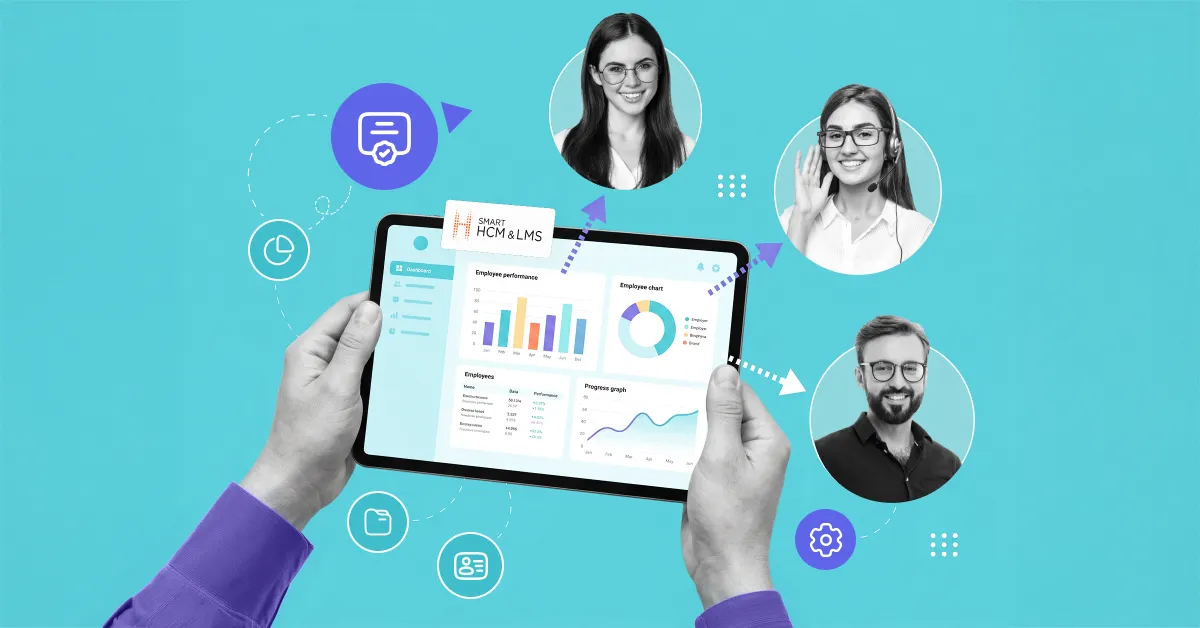
The right talent management tools depend on the processes an organization wants to establish and the current maturity of its HR function. Some companies need to automate recruitment, others are looking for a learning and development system, while others require a comprehensive solution that supports the entire employee lifecycle within a single environment. Understanding where to begin and how to choose the right tools is the first step.
Talent management solutions can generally be grouped into three levels of maturity:
- Basic level — spreadsheets, email, and messaging applications. This is where many organizations begin. At this stage, companies can maintain candidate databases, record interview results, and send welcome emails to new hires. However, as the organization grows, this approach becomes increasingly difficult to manage. Information is easily lost, processes depend heavily on individual employees, and reporting is either manual or unavailable.
- Standalone solutions — separate systems for recruitment, learning, or performance management. These applications perform individual tasks far more effectively than spreadsheets, but they introduce another challenge: employee data becomes fragmented across multiple platforms, making it difficult to obtain a complete view of each employee.
- Comprehensive HCM platforms — integrated solutions covering the entire employee lifecycle — from recruitment and onboarding to learning, performance management, competency development, and HR analytics — within a single environment. They enable organizations to implement a strategic approach to talent management rather than simply automating individual HR activities.
What to automate first
Organizations transitioning from manual HR processes to structured talent management should prioritize the areas where automation delivers the fastest and most significant business value:
- Recruitment is typically the first process to automate. Manually reviewing applications, communicating with candidates, and tracking recruitment pipeline statuses consume a substantial amount of HR time, yet these activities can be easily automated. Integration with job boards accelerates job posting and candidate sourcing, while a centralized talent database ensures promising candidates remain accessible even after a position has been filled.
- Onboarding is another high-priority area. Automated onboarding plans, pre-boarding communications, and progress tracking can all be configured once and then launched automatically for every new employee, regardless of their role or department.
- Learning and development becomes particularly valuable for organizations that run recurring training programs or mandatory courses. Automatically assigning learning paths based on job roles, tracking course completion, administering assessments, and measuring training effectiveness eliminate the need for manual spreadsheets and reminder messages.
- Performance management should be automated once an organization reaches a scale where manual annual performance reviews are no longer sustainable and continuous feedback requires a structured framework.
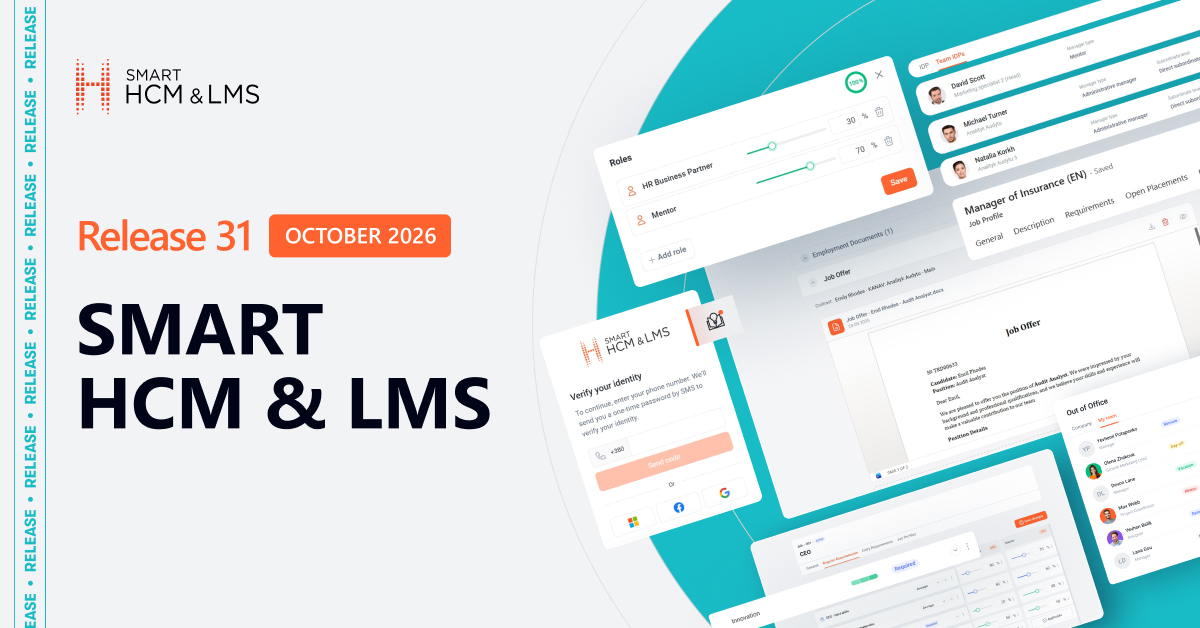
For organizations looking to implement a comprehensive talent management system, SMART business offers the SMART HCM & LMS platform. Its key advantage is a unified environment that supports the entire employee lifecycle. Instead of purchasing and integrating multiple standalone solutions, organizations gain a single platform where all HR processes are interconnected and share a common data foundation. This means that information collected during recruitment automatically flows into the onboarding module. Competency assessment results feed directly into employees’ individual development plans. Meanwhile, analytics powered by Power BI consolidate data across the entire employee lifecycle, providing managers and HR teams with a comprehensive view of everything from recruitment effectiveness to talent development progress and employee engagement.
The platform includes recruitment modules with job board integration, an E-learning solution that enables organizations to build their own corporate learning academy, onboarding with automated adaptation plans, employee performance evaluations supporting 90-, 270-, and 360-degree feedback methodologies, goal setting and individual development plans, skills and competency management, gamification features to enhance employee engagement, as well as dedicated portals for managers and employee self-service.
As a result, organizations gain a fully integrated HR ecosystem for talent management, where every process supports the next and people-related decisions are driven by data rather than intuition.
If your organization is ready to move from disconnected HR processes to a strategic talent management framework, the SMART business team can help you identify the SMART HCM & LMS modules that best fit your business needs.