What has been delivered?
A new Contact Synchronization and Duplicate Prevention framework ensures that employee records remain accurate, unified, and synchronized across SMART HCM & LMS and connected Payroll systems.
The enhancement introduces intelligent employee matching logic that automatically identifies existing Contacts before creating new records, significantly reducing duplication and improving data quality across integrated systems.
The solution introduces a dedicated Account Contact Mapping area that stores the relationship between a Contact, an Account, and the corresponding External ID used by each Payroll system. This allows the platform to accurately recognize employees regardless of where they are hired and maintain synchronization across multiple organizations and payroll environments.
The solution also establishes bi-directional synchronization between SMART HCM & LMS and Payroll systems, ensuring that employee information remains consistent across all connected accounts throughout the employee lifecycle.
The integration also automates the calculation and maintenance of key employee information, including Company, Job Profile, Job Title, Subdivision, Main Contract, and Start Date, ensuring that employee records always reflect the latest organizational structure.
How does it work?
Intelligent duplicate detection
When a Contact record is received through integration, the system automatically checks whether the person already exists using a predefined matching hierarchy.
The verification is performed in the following order:
- External ID
- Email address
- Personal phone number
- Individual Taxpayer Number
- Full Name + Date of Birth
The verification process stops as soon as a matching record is found.
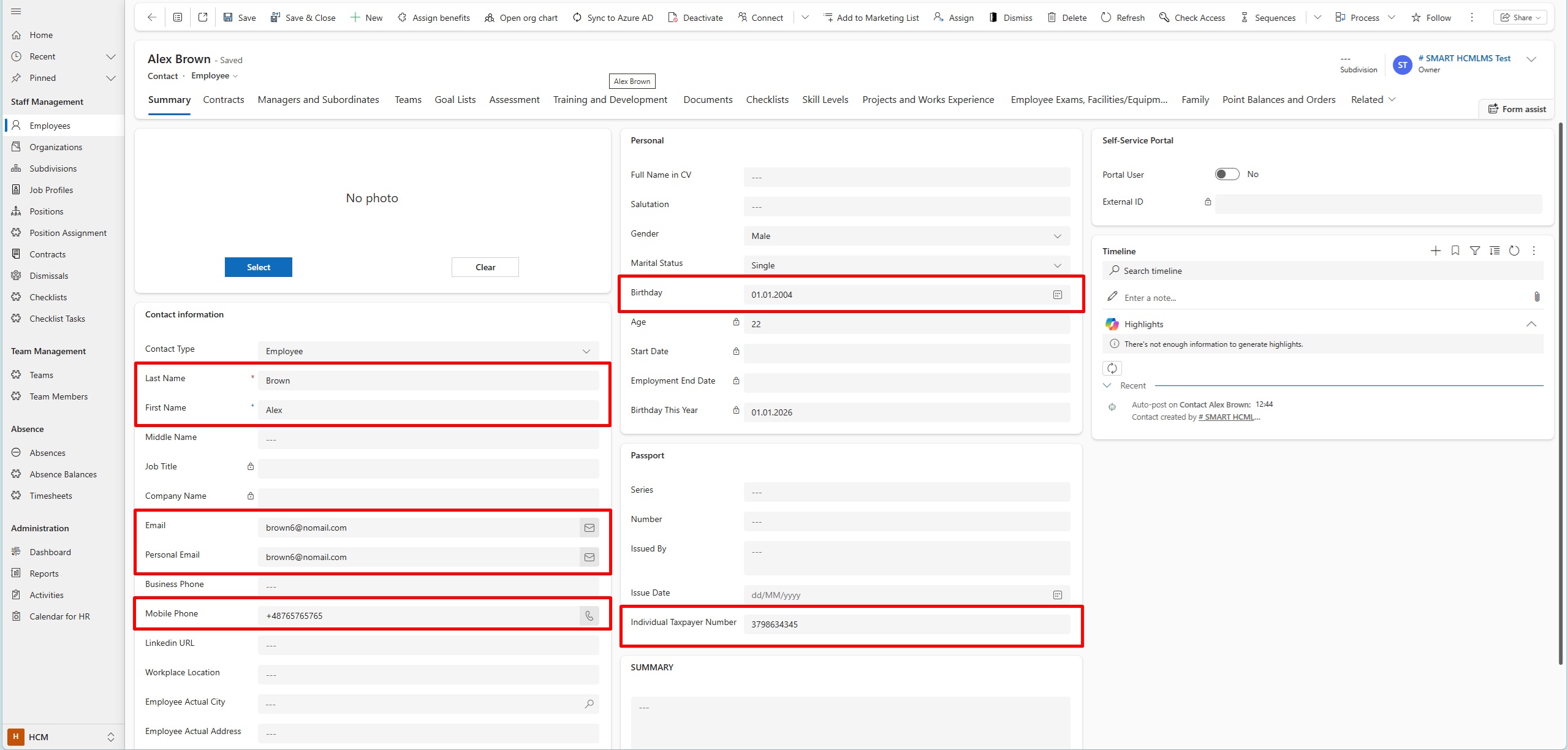
Matching checks both active and inactive Contacts.
As a result:
- Existing employees are automatically recognized
- Duplicate Contacts are prevented
- Historical employee records remain preserved
Account Contact Mapping
A new administrative area has been introduced:
Dictionaries → Common → Account Contact Mapping
The mapping provides a centralized registry of employee relationships across Accounts and external Payroll systems.
Each mapping contains:
- Account
- Contact
- External ID
- System-generated Name
This creates a single source of truth for employee identification across integrated systems.
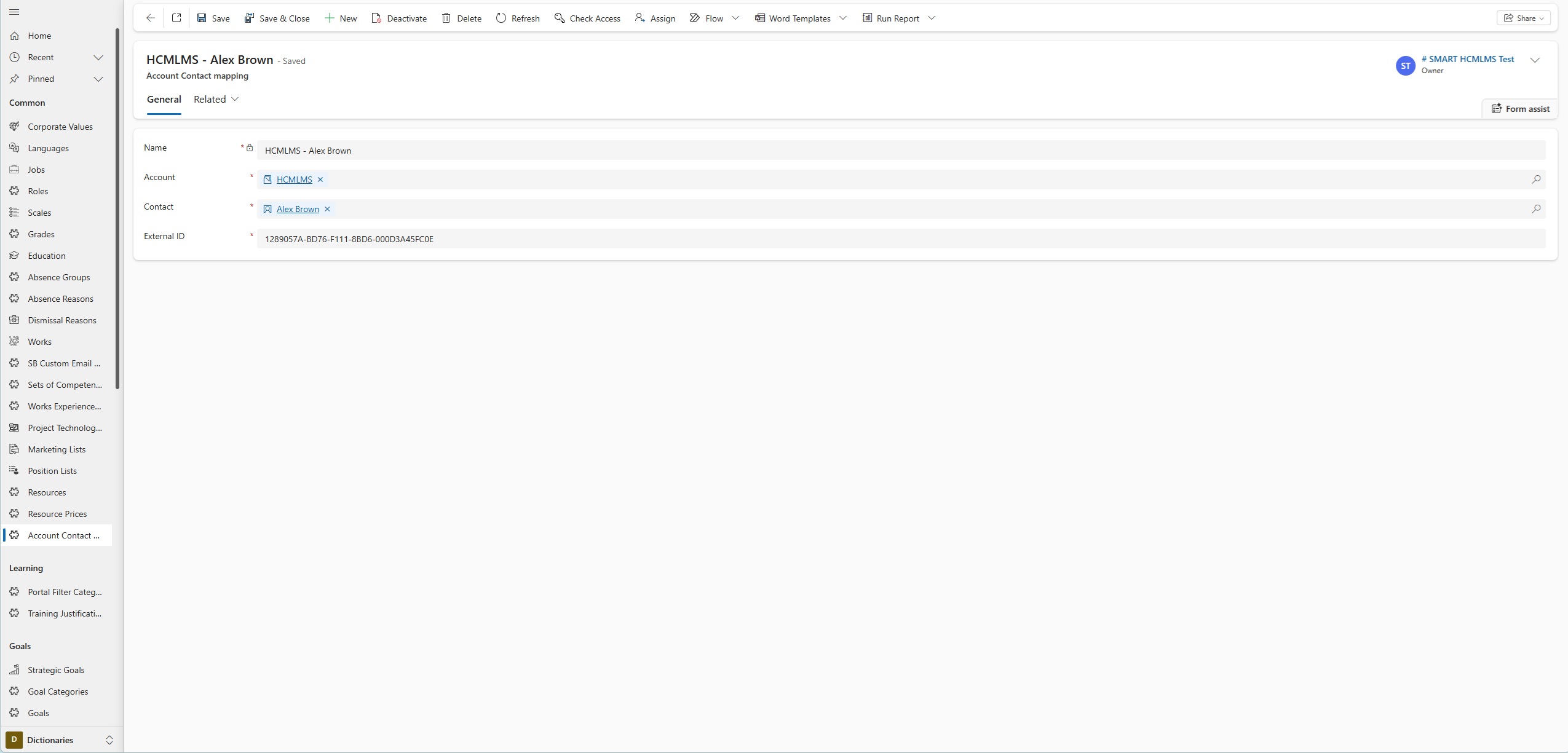
Employees can be associated with multiple Accounts simultaneously.
The Account Contact Mapping structure allows:
- Different External IDs per Payroll system
- Independent account relationships
- Synchronization across all active payroll integrations
Cross-system synchronization
By default, any updates originating from Payroll systems automatically update the corresponding employee profile in HCM&LMS.
After the HCM&LMS record is updated, the changes are propagated to all connected Payroll systems linked through active Account–Contact Mapping records.
This mechanism ensures that all systems stay synchronized and operate with the most up-to-date employee information.
Cross-System Hiring Synchronization
The solution supports hiring scenarios initiated from either system.
Hiring from SMART HCM & LMS
- Contact is created or activated
- Employee Contract is created
- Position Assignment is created
- Data is sent to Payroll
- Payroll returns External IDs
- Account Contact Mapping is automatically created
Hiring from Payroll
- Payroll creates employee records
- Employee data is sent to SMART HCM & LMS
- Existing Contact is detected or new Contact is created
- Account Contact Mapping is generated automatically
- Employee Contract and Position Assignments are synchronized
This ensures that every employee is represented by a single, consistent profile within SMART HCM & LMS, regardless of where the hiring process originates.
Automatic Derived Employee Data
The system automatically derives and continuously updates important employee information based on active Employee Contracts and Position Assignments.
Automatically maintained fields include:
- Company Name
- Job Profile
- Job Title
- Subdivision
- Main Contract
- Employment Start Date
The platform applies predefined prioritization rules, including support for Primary Positions and Main Contracts, ensuring consistent organizational reporting across the system.
Who will benefit?
• HR Departments
For maintaining a single employee profile across multiple companies, payroll systems, and employment scenarios while preventing duplicate records.
• Payroll Teams
For reliable synchronization of employee data and accurate tracking of external identifiers across systems.
• Global and multi-account organizations
For managing employees who may be associated with multiple accounts, entities, or payroll systems while maintaining a unified employee profile.
Why is it convenient?
1. Eliminates duplicate employee records
Employees are identified intelligently using multiple matching criteria before new records are created.
2. Supports multi-company environments
The same employee can be linked to multiple Accounts while maintaining separate Payroll identifiers.
3. Maintains data consistency across systems
Changes from Payroll and SMART HCM & LMS remain synchronized throughout the employee lifecycle.
4. Supports multiple hiring scenarios
Works consistently whether hiring occurs inside SMART HCM & LMS or in an external Payroll system.
5. Automates organizational updates
Employee fields such as Company, Job Profile, Title, and Subdivision are updated automatically.
7. Preserves historical information
Inactive employees and account relationships remain traceable and can be reactivated when required.
Additional feature capabilities
- Multi-level duplicate detection logic based on five independent matching criteria.
- Multi-account employee support
- Dedicated Account Contact Mapping area
- Automatic creation and maintenance of External ID mappings
- Bidirectional Payroll ↔ SMART HCM & LMS synchronization
- Automatic activation and reactivation of Contacts and mappings
Why is this important?
Organizations often operate multiple legal entities, payroll systems, and employment models, making employee identification and synchronization increasingly complex.
The new Account Contact Mapping area and Contact Duplicate Prevention framework creates a reliable foundation for managing employee data across systems while maintaining a single, accurate employee profile within SMART HCM & LMS .
By introducing centralized employee identification, automated lifecycle processing, intelligent duplicate detection, and synchronized organizational updates, the solution delivers:
- more accurate employee records
- reduced manual administration
- consistent cross-system data
- improved integration reliability
In short: it creates a unified employee data ecosystem where information remains accurate, synchronized, and consistent across SMART HCM & LMS and all connected Payroll systems.
Employee Lifecycle Integration: Seamless Synchronization Between Payroll and SMART HCM & LMS
What has been delivered?
A new Employee Lifecycle Integration Framework has been introduced to establish a fully automated and reliable synchronization process between Payroll systems and SMART HCM & LMS.
The new functionality supports the entire employee lifecycle, including Hiring, Transfer, Dismissal, and Reversal operations, ensuring that employee information remains accurate and synchronized across systems at all times.
The integration introduces structured processing rules, automatic Position Assignment management, derived employee data calculations, future-dated operation support, and advanced protection mechanisms such as idempotency, dependency validation, and audit tracking.
This enhancement creates a predictable and transparent process for managing employee movements while maintaining Payroll as the system of record and SMART HCM & LMS as the operational platform for workforce visibility and organizational management.
How does it work?
Automated Hiring Process
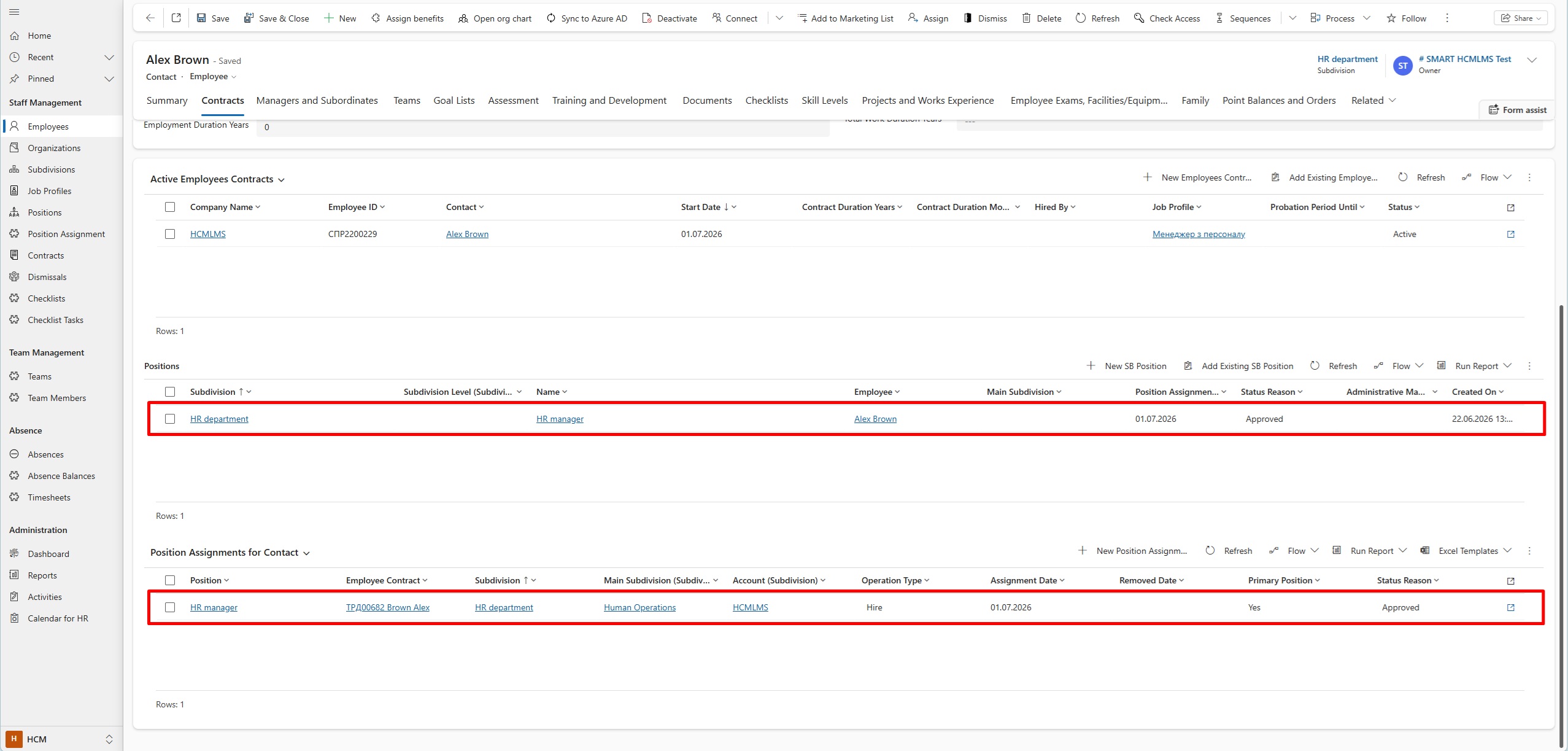
When a new employee is hired, the integration automatically creates or synchronizes the required employee records.
The process includes:
- Position Assignment creation
- Position-to-employee linkage
- Organizational assignment updates
For employees hired through Recruiting, SMART HCM & LMS creates the records and Payroll returns external identifiers, ensuring synchronization without duplicate creation.
Automated Employee Transfers
The system automates employee movements between positions, departments, and organizational structures.
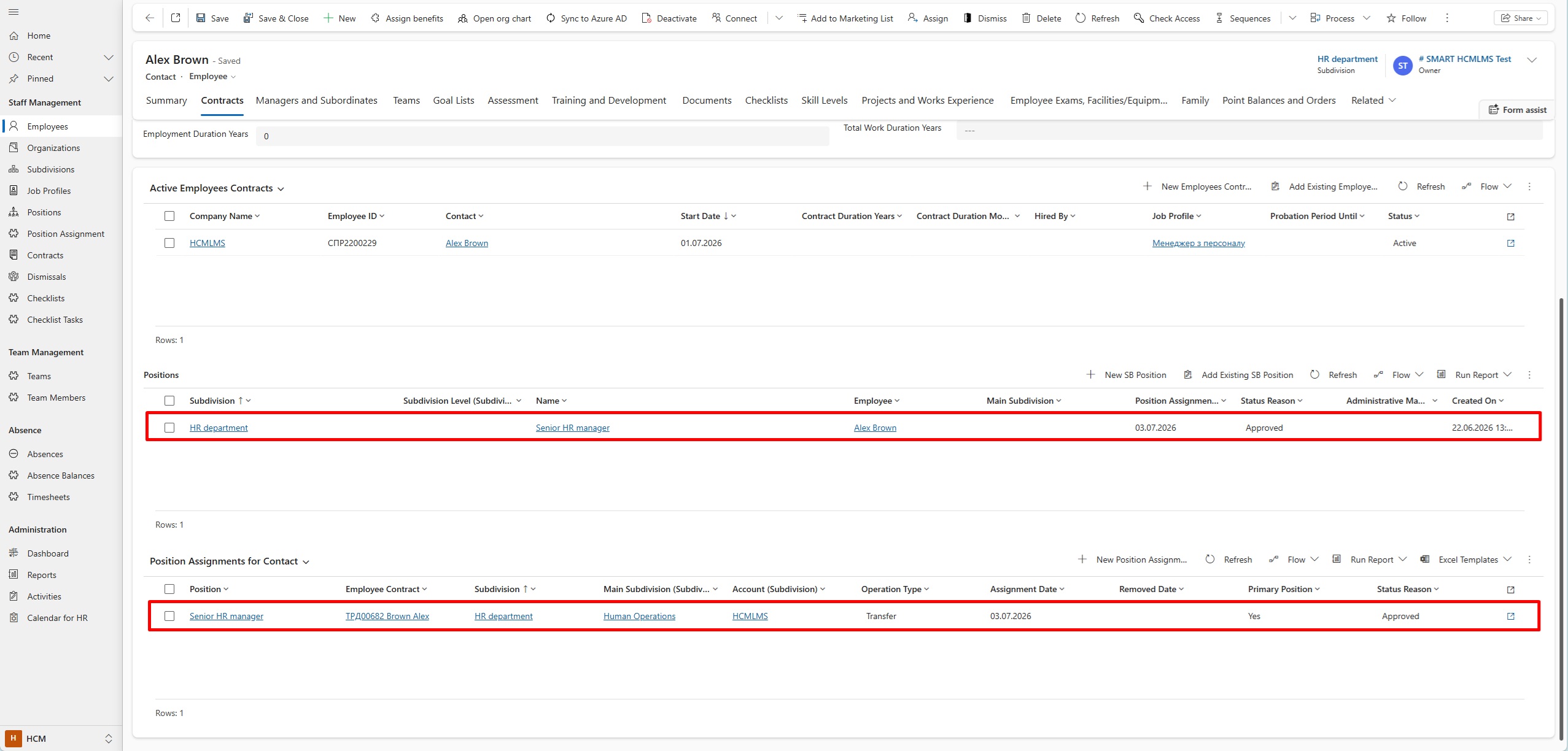
When a transfer occurs:
- Previous Position Assignments are automatically closed
- New Position Assignments are created
- Position Current Assignment is updated
- Organizational hierarchy is recalculated
The transfer process ensures that employee history remains fully traceable while reflecting the employee’s current organizational placement.
Automated Dismissal Process
Employee dismissals are managed automatically through integration events.
The system:
- Closes Position Assignments
- Releases occupied Positions
- Updates Employee Contract status
- Removes organizational relationships when applicable
- Updates employee access and employment status
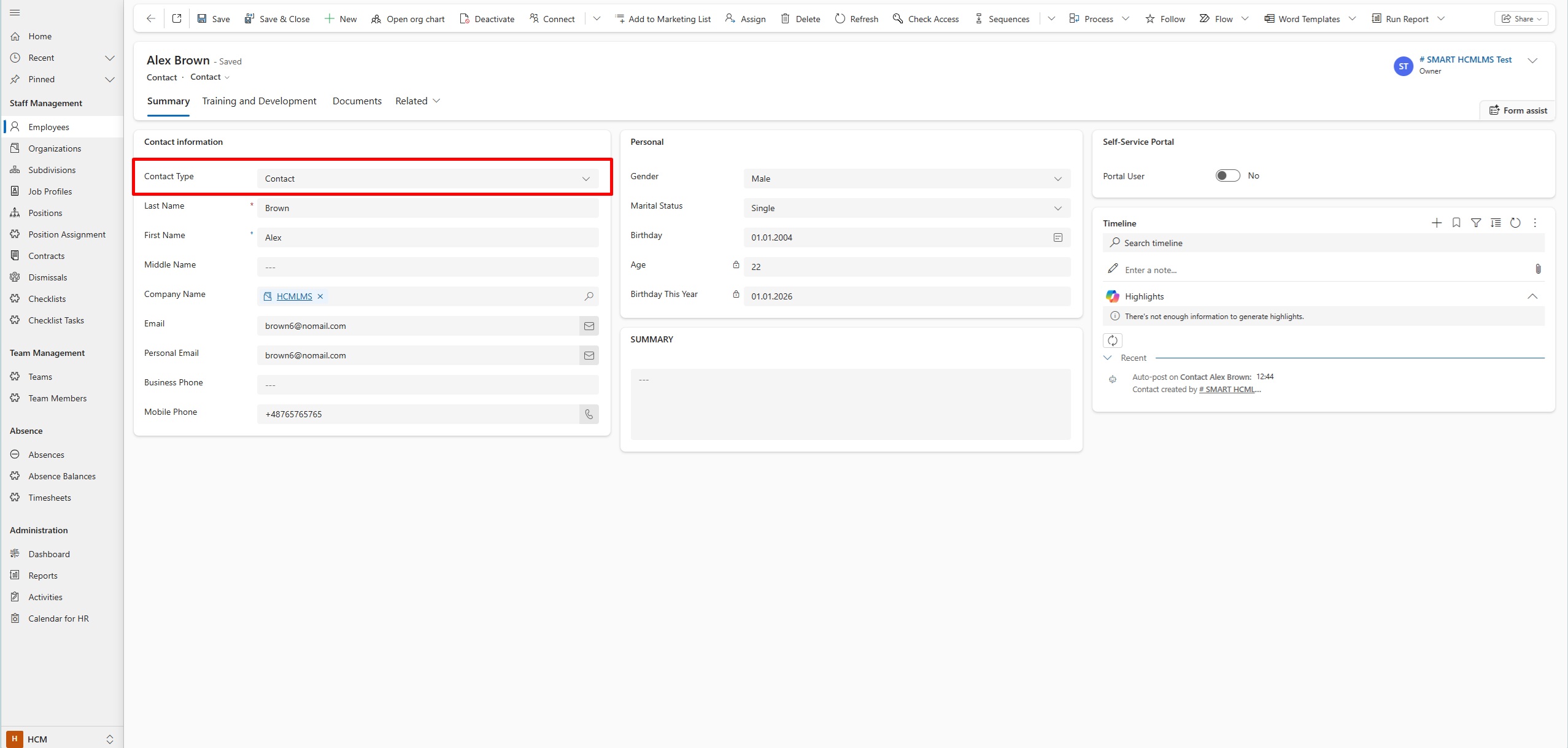
When an employee no longer has active contracts, related organizational fields are automatically cleared and the employee is converted back to a Contact record.
Reversal Operations
The framework introduces support for controlled reversal scenarios.
If a previously processed operation requires cancellation, the system can automatically restore the previous state.
Supported rollback scenarios include:
- Hiring Reversal
- Transfer Reversal
- Dismissal Reversal
The solution restores:
- Position Assignments
- Organizational assignments
- Employee relationships
- Derived employee information
To ensure data integrity, reversal is allowed only when subsequent dependent operations do not exist.
Position Assignment Lifecycle Management
Position Assignments are now managed automatically throughout the employee lifecycle.
The system handles:
- Creation of Hire position assignments
- Creation of Transfer position assignments
- Closure of Dismissal position assignments
- Position Current Assignment
- Organizational hierarchy recalculation
This ensures clear visibility into employee movement history and organizational structure.
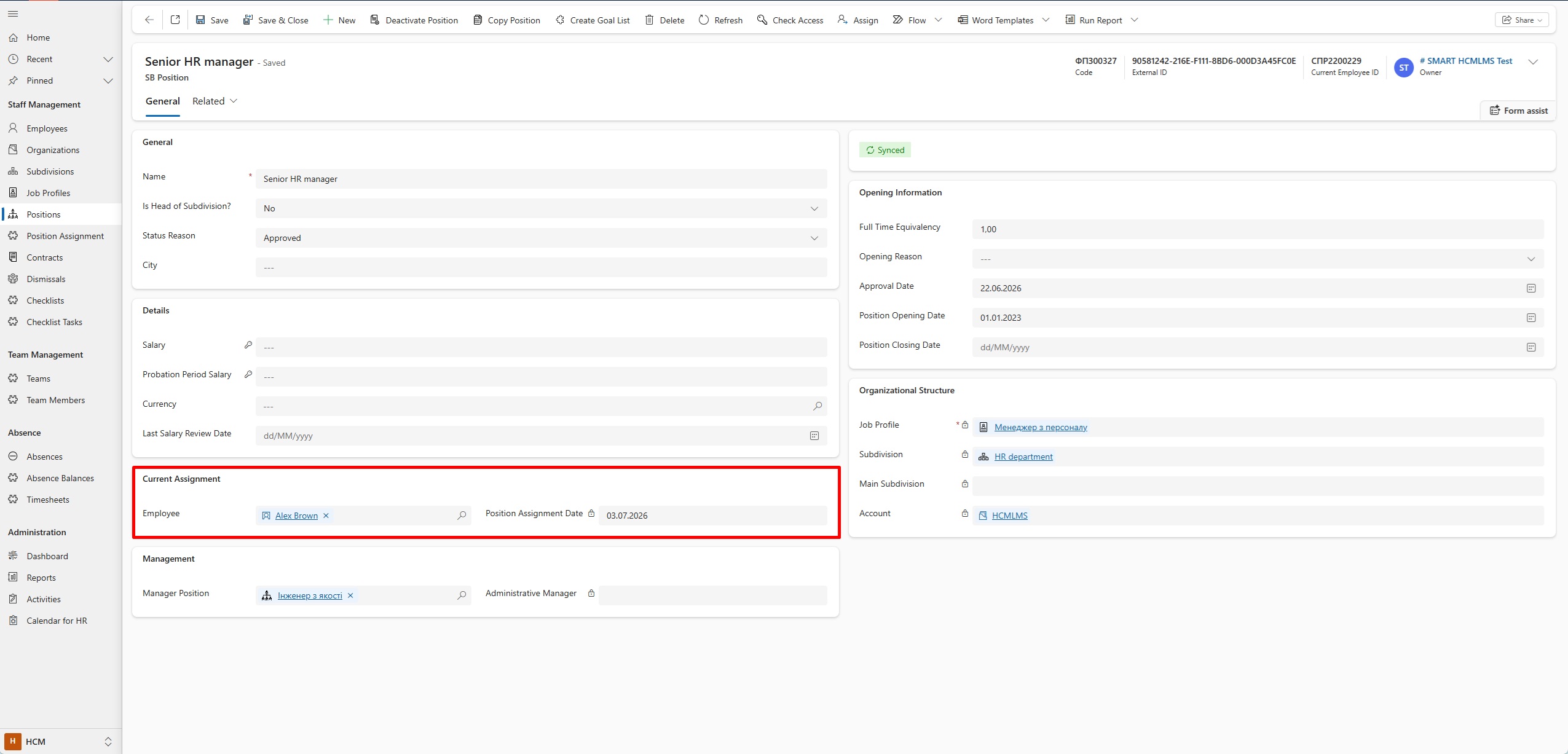
Automatic Employee Data Recalculation
The platform continuously recalculates key employee attributes whenever contracts or position assignments change.
The following fields are maintained automatically:
- Company Name
- Job Profile
- Job Title
- Subdivision
- Main Contract
- Start Date
The system uses predefined prioritization rules based on:
- Primary Positions
- Main Contracts
- Earliest active assignments
- Active employment relationships
This guarantees accurate employee information across all business processes and reports.
Support for Future-Dated Operations
The integration supports future-effective workforce events.
HR and Payroll teams can prepare:
- Future hires
- Planned transfers
- Upcoming dismissals
The system schedules and applies changes according to the provided effective dates while preserving consistency across systems.
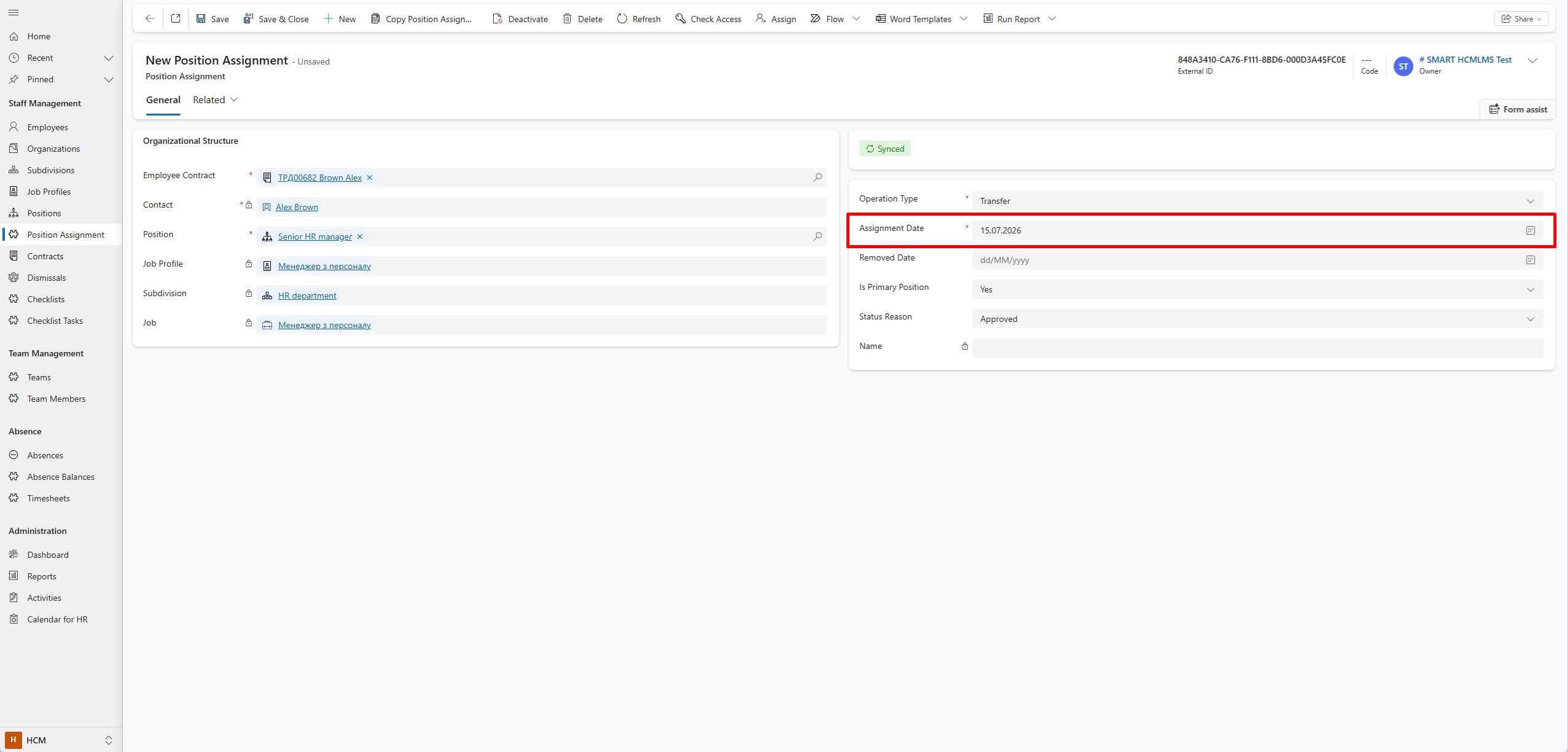
Organizational Structure Updates
The integration automatically updates organizational relationships based on employee movements.
This includes:
- Head of Subdivision assignments
- Administrative Manager assignments
- Employee-to-position relationships
- Position Current Assignment updates
The organizational structure remains aligned with the actual workforce state without manual intervention.
Real-Time Payroll Integration
The new integration framework enables real-time synchronization between SMART HCM & LMS and all connected Payroll systems.
Employee lifecycle events are processed immediately as they occur in Payroll, ensuring that both systems remain fully aligned without delays or manual intervention.
The integration supports real-time processing of:
- Hiring events
- Transfer events
- Dismissal events
- Reversal (cancellation) events
Once an event is received, SMART HCM & LMS automatically executes all required business processes, including:
- Position Assignment creation and updates
- Employee Contract synchronization
This event-driven approach eliminates the need for Payroll systems to send multiple separate transactions for position changes, reporting lines, organizational assignments, or employee structure updates. Instead, a single business event triggers all required actions within SMART HCM & LMS.
Who will benefit?
• HR Departments
For automated workforce administration, reduced manual data maintenance, and accurate employee records.
• Payroll Teams
For simplified integration and reduced maintenance effort.
Payroll systems no longer need to send separate records for every organizational change, position update, reporting line modification, manager assignment, or Position Assignment lifecycle event. Instead, Payroll only sends standardized employee lifecycle events such as Hiring, Transfer, Dismissal, or Reversal.
SMART HCM & LMS automatically performs all downstream actions and updates the organizational structure in real time, significantly reducing integration complexity and minimizing the risk of data inconsistencies.
• Business Leaders and Managers
For accurate organizational structures, workforce reporting, and employee assignment visibility.
Why is it convenient?
1. Single source of truth for workforce events
Payroll remains the authoritative source while SMART HCM & LMS automatically stays synchronized.
2. Automated employee lifecycle management
Hiring, transfers, dismissals, and reversals are processed with minimal manual effort.
3. Accurate organizational structure
Position Current Assignment, managers, and head of subdivisions remain continuously updated.
4. Supports future workforce planning
Future-effective employee changes can be prepared in advance.
5. Maintains complete employee history
All workforce movements remain fully traceable and auditable.
6. Real-time employee lifecycle synchronization
Employee hires, transfers, dismissals, and organizational changes are reflected across SMART HCM & LMS and Payroll immediately after the event occurs, ensuring that HR, Payroll, and management teams always work with up-to-date information.
Additional options of the feature
- Automated Hiring, Transfer, Dismissal, and Reversal operations
- Position Assignment lifecycle management
- Future-dated operation support
- Automatic derived Contact field calculations
- Dependency validation before execution
- Support for operation rollback scenarios
- Automatic organizational hierarchy updates
- Daily contract consistency verification
Why is this important?
The new Employee Lifecycle Integration Framework creates a reliable foundation for employee management by connecting Payroll and SMART HCM & LMS through a structured and automated process.
For organizations with dynamic workforce movements, multiple legal entities, and complex organizational structures, this functionality delivers:
- reduced manual administration
- improved data consistency across systems
- more reliable HR operations
In short: it transforms employee lifecycle management into a transparent, automated, and fully synchronized process, ensuring that every hiring, transfer, dismissal, and organizational change is accurately reflected across the entire HR ecosystem.
HR Analytics: Turning HR Data into Strategic Decisions
What has been delivered?
A new HR Analytics module has been introduced to provide a centralized, real-time analytics platform for workforce, recruitment, organizational effectiveness, employee engagement, and HR cost management.
The solution consolidates HR data into a single analytical environment and transforms operational information into actionable business insights.
The new functionality provides executives, HR leaders, recruiters, and managers with access to a comprehensive set of HR metrics, trends, benchmarks, and drill-down analyses, enabling faster and more informed decision-making.
The platform combines:
- Real-time operational metrics
- Historical trend analysis
- Comparative period reporting
- Workforce composition analytics
- Recruitment performance tracking
- HR budget monitoring
- Employee engagement indicators
- Executive-level dashboards
This enhancement establishes a single source of truth for HR and workforce analytics across the organization.
How does it work?
Departments HR Dashboard
The module delivers an executive dashboard providing a consolidated view of the organization’s workforce and HR performance.
Users can monitor key KPIs including:
- Employee headcount
- Staffing level
- Open vacancies
- Hiring volume
- Veteran workforce statistics
- Staffing completeness
- Employee tenure
- Average employee age
- Diversity metrics
• Gender distribution
• Age structure
• Tenure structure - eNPS
All metrics can be analyzed by departments and periods.
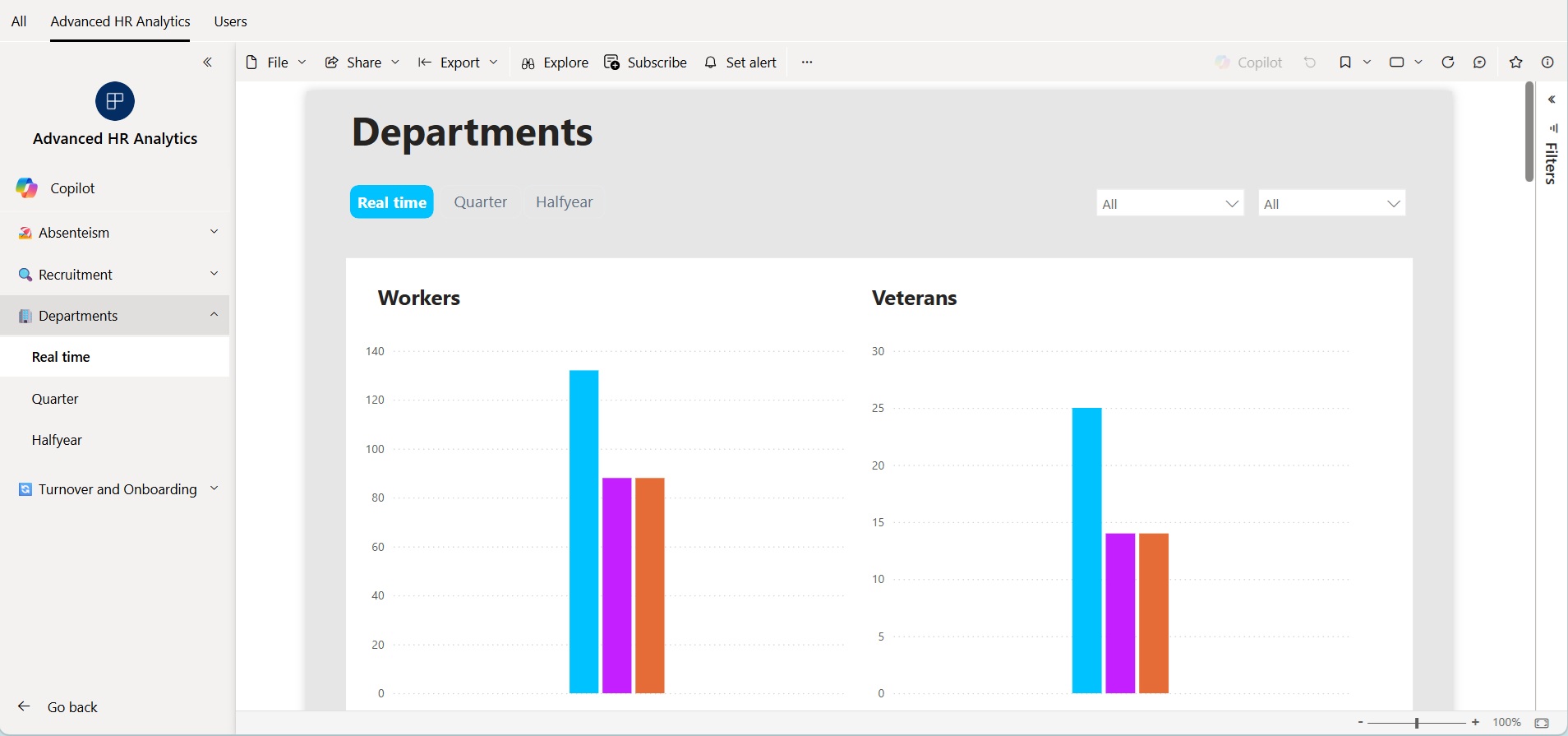
Recruitment Analytics
Recruitment leaders can track hiring performance across the entire recruiting funnel.
Available indicators include:
- Active vacancies
- Closed vacancies
- New vacancies
- Number of hires
- Hiring speed
- Offer acceptance rate
- Candidate source effectiveness
- Vacancy closure rate
- Recruitment Funnel Visibility
Recruiting activities can be analyzed at every stage of the hiring process. The system provides conversion analytics across:
• Candidates
• Screening
• HR Interview
• Hiring Manager Review
• Qualification
• Job Offer
• Accepted Offer
• Hire
The platform also supports recruiter-level and department-level performance analysis.
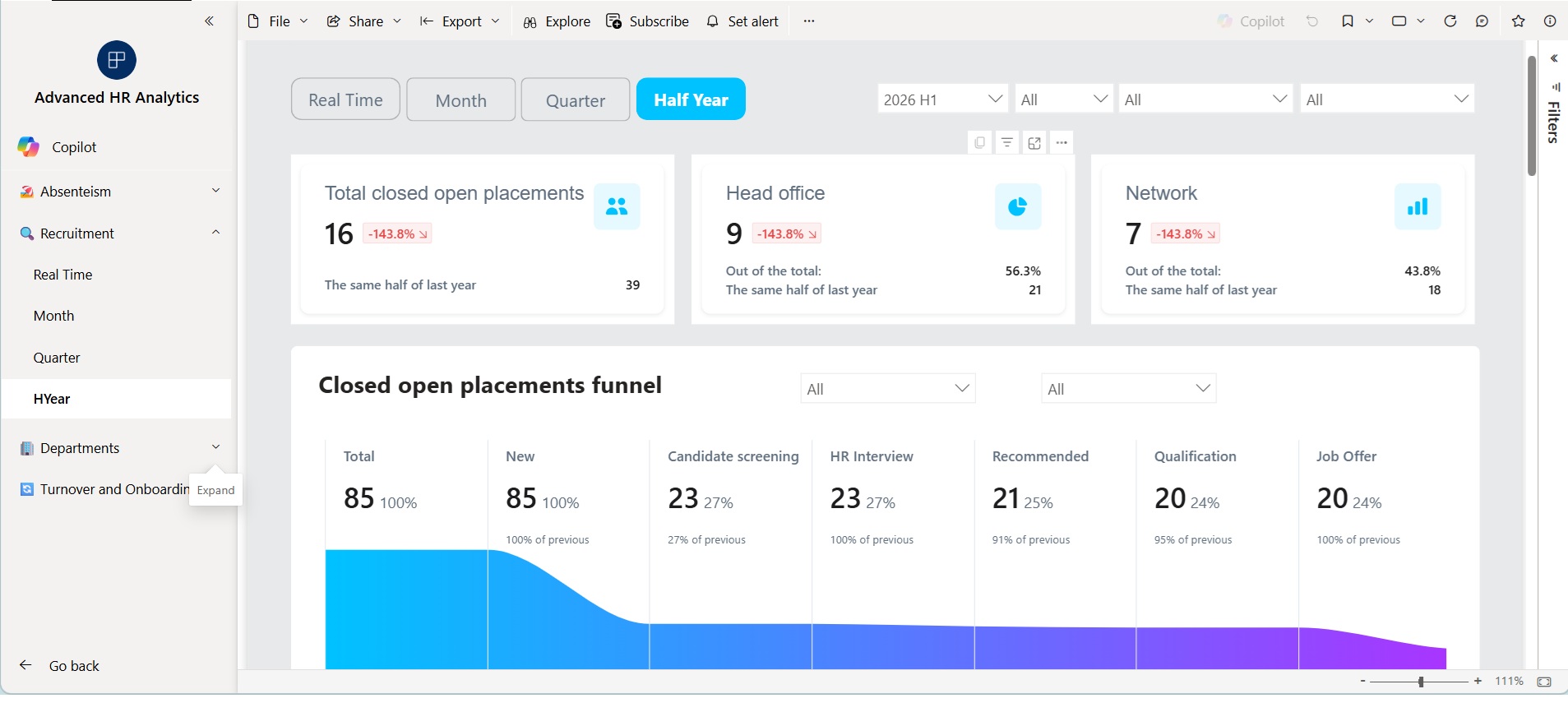
This helps identify bottlenecks and optimize recruitment efficiency.
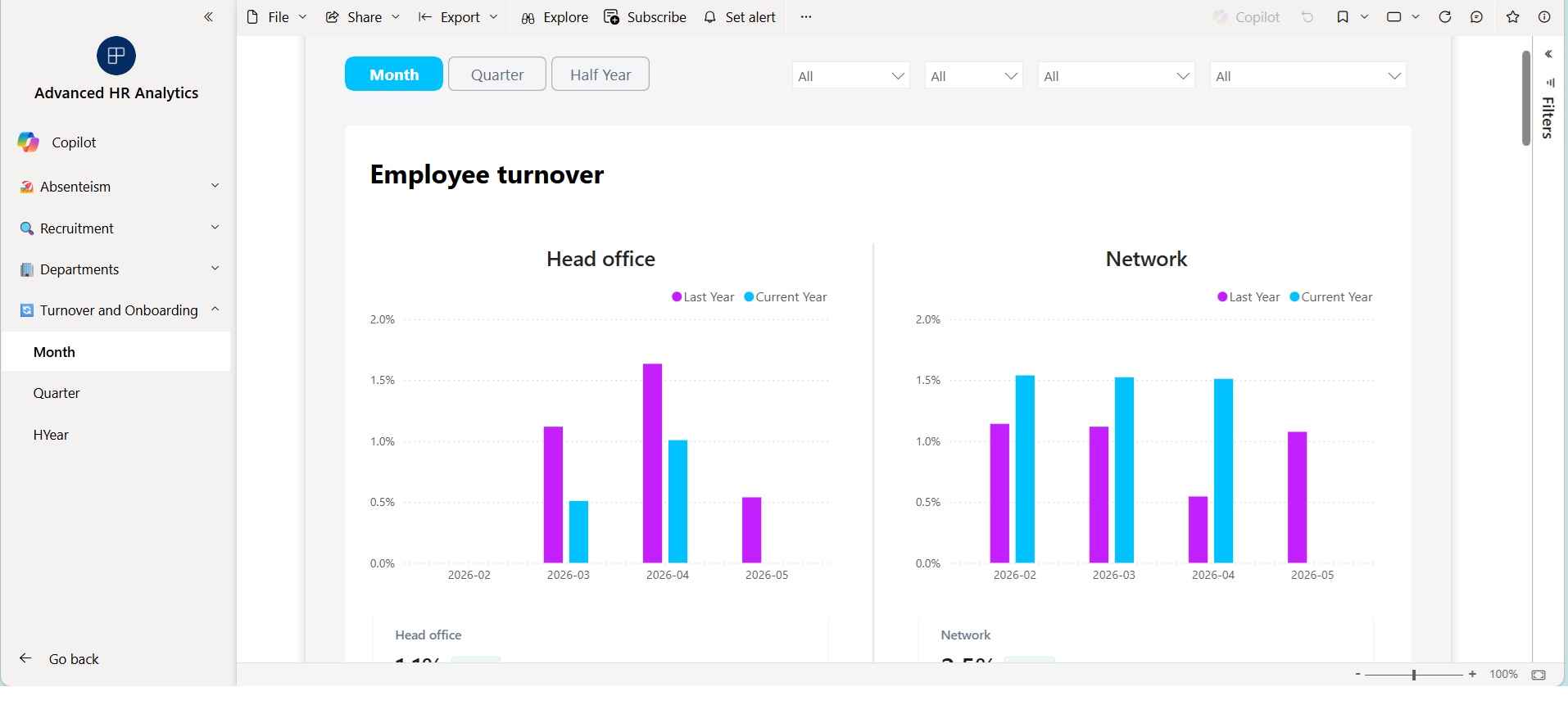
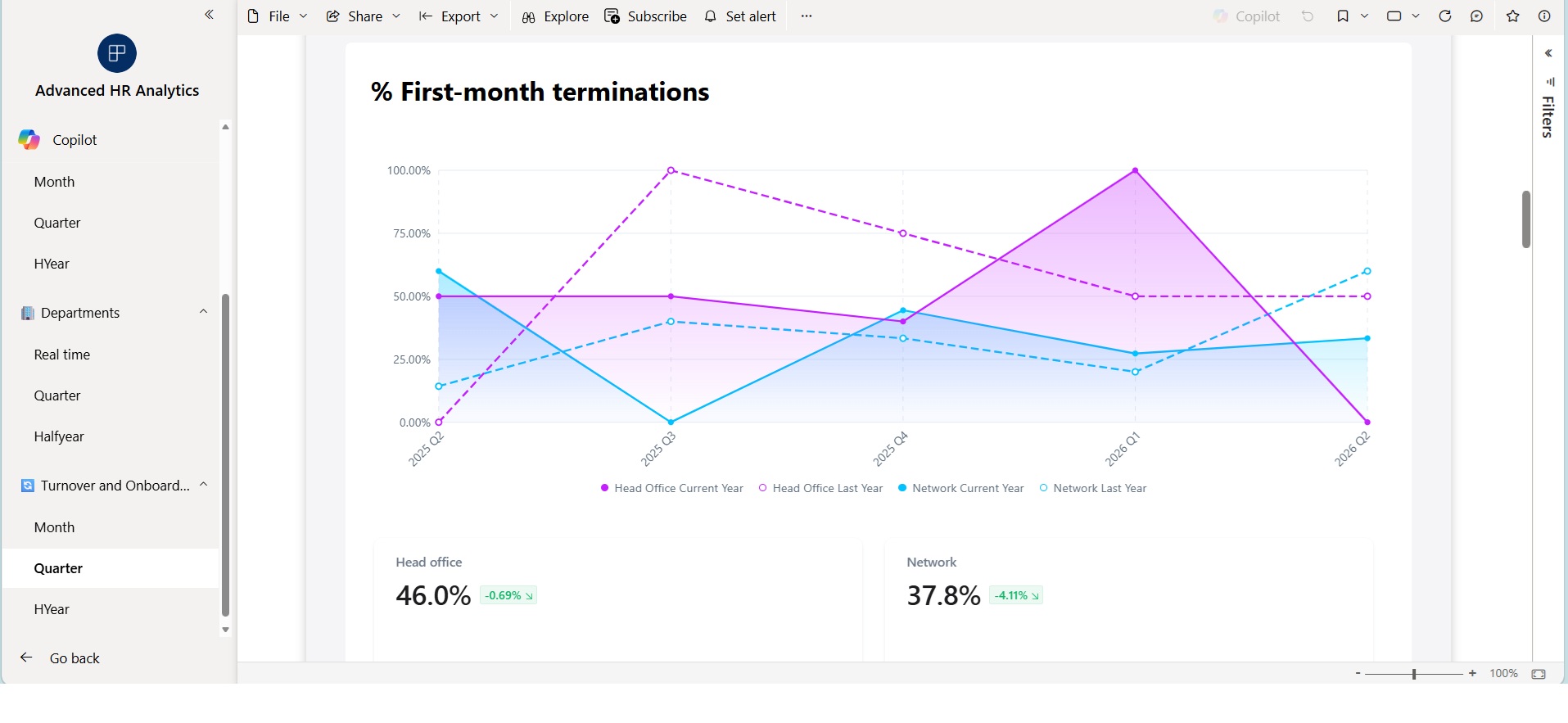
Workforce Retention & Turnover Analytics
The solution provides detailed visibility into employee retention trends.
Organizations can track:
- Monthly turnover
- Quarterly turnover
- Annual turnover
- Turnover by department
- Turnover by age group
- Turnover by tenure
- Turnover reasons
This enables HR teams to understand why attrition occurs and where intervention is needed.
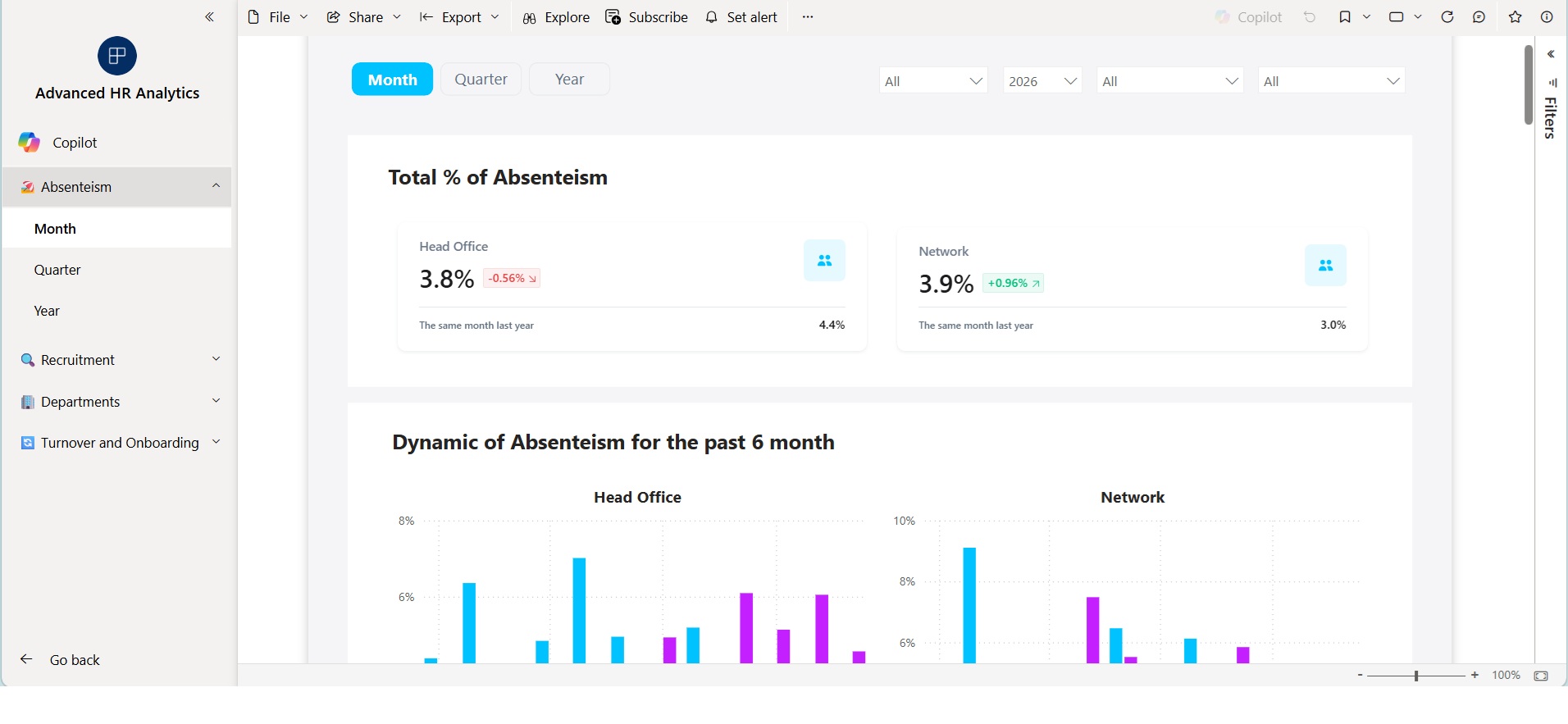
Absenteeism Analytics
The system provides detailed monitoring of employee absence patterns.
Metrics include:
- Overall absenteeism rate
- Sick leave rate
- Vacation utilization
- Absence duration
- Absence reasons
Organizations can quickly identify trends affecting workforce productivity and operational continuity.
Every dashboard component supports detailed drill-down capabilities.
Users can move from high-level KPIs to underlying operational records, including:
- Employee lists
- Vacancy lists
- Absence records
- Turnover details
- Recruitment performance
This allows leadership teams to quickly move from insight to action.
All dashboards support dynamic filtering by:
- Company
- Department
- Period
The system also supports:
- Month-over-month comparisons
- Quarter-over-quarter comparisons
- Historical trend analysis
Who will benefit?
• HR Directors and CHROs
For monitoring workforce health, evaluating HR initiatives, and supporting strategic planning with data-driven insights.
• CEOs, COOs and CFOs
For understanding how workforce trends impact business performance, productivity, costs, and growth.
• HR Analytics and People Analytics Teams
For centralized reporting, advanced analysis, and reduced manual reporting effort.
• Recruiting Teams
For tracking hiring efficiency, funnel performance, recruiter productivity, and recruitment costs.
• Business Unit Managers
For monitoring staffing levels, turnover, absenteeism, and employee engagement within their areas of responsibility.
Why is it convenient?
- Real-time workforce visibility
Decision-makers always work with the most up-to-date HR information available. - Reduces manual reporting effort
Automated calculations eliminate repetitive spreadsheet work and manual consolidation.
- Historical analysis
Track trends across months, quarters, and years.
- Scales with organizational growth
Supports complex organizational structures without increasing reporting complexity.
Additional options of the feature
- Real-time HR dashboards
- Executive-level workforce analytics
- Recruitment funnel analytics
- Hiring speed analysis
- Vacancy management analytics
- Staffing level monitoring
- Turnover analytics and attrition reasons
- Absenteeism analytics
- Veteran workforce analytics
- eNPS reporting
- Gender and age diversity analytics
- Employee tenure analysis
- Historical trend analysis
- Flexible dashboard filtering
Why is this important?
Organizations increasingly rely on data to make workforce and business decisions, yet HR information is often fragmented across systems, spreadsheets, and departments.
The new HR Analytics module provides a unified analytical foundation that turns raw workforce data into meaningful business insights.
It helps organizations:
- improve strategic workforce planning
- optimize recruitment performance
- reduce turnover risks
- increase reporting accuracy
- measure the impact of HR initiatives
- strengthen data-driven decision-making
In short: HR Analytics transforms HR data from operational reporting into a strategic management tool, giving leaders complete visibility into their people, processes, and performance in real time.