According to a study by DianaHR, a company specializing in talent management, one in three new employees leaves within the first 90 days of employment. This points to ineffective management of the early stages of the employee lifecycle. At the same time, 81% of business leaders directly link employee performance to the achievement of their company’s strategic goals. Poor onboarding and high employee turnover therefore have a direct impact on an organization’s ability to execute its strategy, making effective employee lifecycle management a critical driver of business growth. This is where modern HCM systems come into play, integrating HR processes into a single platform while ensuring data continuity and greater transparency across workforce management.
What is an HCM system and how does it support Human Capital Management?
A Human Capital Management (HCM) system is a comprehensive digital platform that brings together recruiting, onboarding, learning and development, performance management, and every stage of the employee lifecycle within a single environment. It enables organizations to manage the entire employee journey —from the first interaction with a candidate through the end of employment.
The primary value of an HCM system lies in automating core HR processes, allowing organizations to save time, reduce administrative workload, and focus on developing their people. According to the international recruitment company Pentabell, citing Deloitte research, HR professionals spend up to 57% of their working time on administrative tasks. Deloitte also links a positive workforce experience and high employee engagement to stronger business outcomes, including faster revenue growth. By implementing an HCM solution, organizations can effectively manage human capital throughout every stage of the employee lifecycle.
Key benefits of an HCM system:
- HR process automation
- Reduced administrative workload for HR teams
- Faster employee onboarding
- Real-time workforce analytics
- Lower employee turnover risk
Employee Lifecycle Management: key stages and their business value
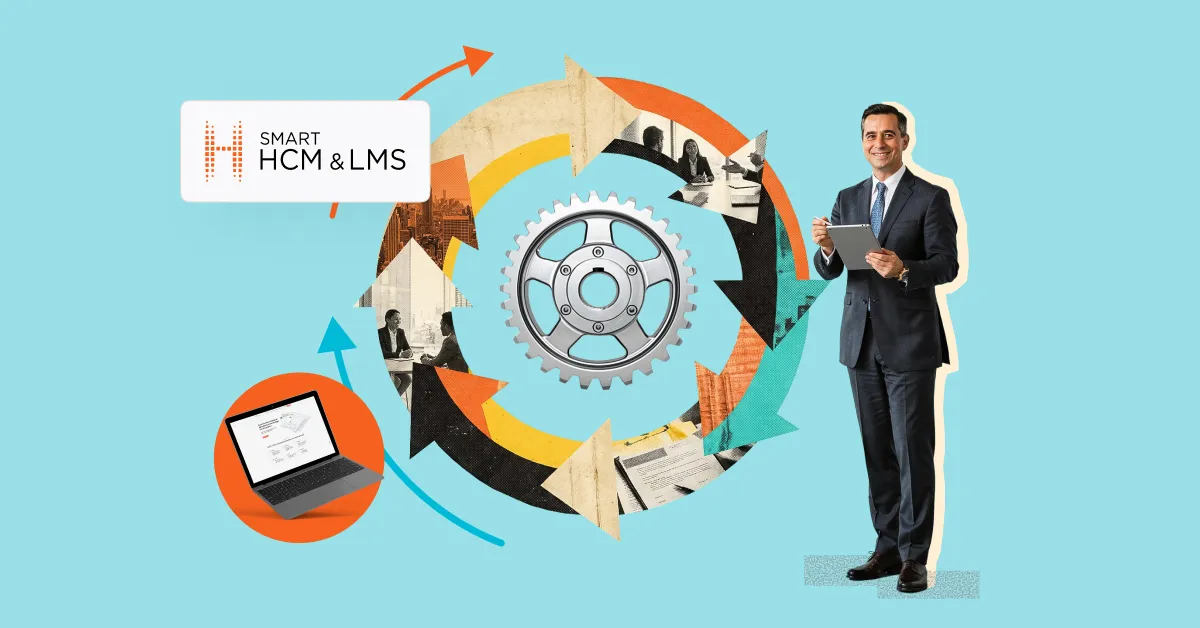
Employee Lifecycle Management (ELM) is a strategic approach to managing every stage of an employee’s journey within an organization. Its goal is to create an effective employee experience from the first interaction with the company through the end of employment, improving productivity, employee retention, and talent development.
Employee lifecycle management enables organizations to:
- Track HR processes from end to end
- Increase employee satisfaction and engagement
- Accelerate onboarding while reducing employee turnover
The key stages of the employee lifecycle:
- Recruitment and Talent Acquisition: Finding and selecting candidates who align with the company’s culture and business needs.
- Onboarding: Helping new employees integrate into the organization by introducing them to its processes, culture, and goals.
- Learning and Development: Building employee skills, supporting career growth, and developing competencies.
- Performance Management: Providing regular feedback, setting goals and KPIs, and measuring employee performance.
- Retention and Engagement: Supporting employees through recognition programs, internal surveys, incentive initiatives, and rewards.
- Offboarding: Ensuring structured knowledge transfer from departing employees to their managers or teams, analyzing the reasons behind employee departures to improve HR processes, and organizing a smooth transition of responsibilities to minimize business risks and maintain operational continuity.
Each of these stages shapes the employee experience and directly influences employee satisfaction, productivity, and loyalty. Managing them systematically helps organizations reduce the costs associated with turnover while strategically improving overall business performance.
Benefits of managing the employee lifecycle with an HCM platform
Managing the employee lifecycle through an HCM platform delivers not only better process organization but also measurable business outcomes — in financial performance, productivity, and employer brand.
Data continuity and single source of truth
When recruiting, onboarding, performance management, and employee development are handled in separate systems, organizations typically face three challenges:
- Multiple versions of the same data
- Delays in information sharing
- Lack of end-to-end analytics
An HCM platform creates a unified environment where every stage of the employee journey is stored in one system, enabling seamless data flow between modules (Recruiting → Onboarding → Performance Management → Learning & Development).
Practical example
An HR Director wants to understand why turnover among sales managers is increasing. In a fragmented environment, they would need to manually combine data from recruiting sources, onboarding records, KPI performance, and performance reviews. In an integrated HCM platform, all of this information is already connected.
As a result, the HR team can quickly identify patterns — for example, that most sales managers leave within four to six months of joining the company and also have the lowest sales performance during their first quarter. The analytics further reveal that these employees either did not complete the full product training program or did not have regular one-on-one meetings with their managers. This points to a specific internal issue: inadequate onboarding and insufficient managerial support during the first months of employment. The company can redesign its onboarding program, strengthen training completion monitoring, and introduce mandatory manager check-ins throughout the probationary period. Decisions are therefore based on complete, connected data rather than assumptions, allowing the organization to address the root causes of turnover instead of merely dealing with its consequences.
Proactive retention through regular employee surveys across the employee lifecycle
Most companies become aware of engagement issues only after an employee has submitted their resignation. Regular employee surveys make it possible to identify risks much earlier — when motivation starts to decline or employees begin to lose focus.
Within an HCM platform, employee surveys are integrated into the overall workforce management system rather than existing separately in Google Forms or spreadsheets. As a result, survey responses are automatically linked to data such as the employee’s position, manager, performance review results, tenure, and KPI trends.
The system can automatically trigger surveys at key milestones, including:
- 30-, 60-, and 90-day onboarding surveys
- Regular team pulse surveys
- Manager relationship assessments
- Exit surveys with analytics on turnover reasons
The true value of HCM lies not simply in collecting responses, but in providing analytics by department, manager, and reporting period.
Practical example:
A company notices declining performance within its software development team. The HCM system also shows that employee engagement in the same team has been steadily decreasing over the previous three months. Survey results reveal that 42% of employees do not understand project priorities and are not receiving regular feedback.
The platform allows HR to correlate this information with goal completion data and the frequency of one-on-one meetings. The analysis shows that the department was not using the goal management module, and managers rarely documented feedback in the system. This is no longer just an abstract case of “low engagement” — it is a clearly identifiable management risk. After introducing regular one-on-one meetings through the system and updating employee goals, satisfaction levels improve and turnover within the department declines.
Employee surveys within an HCM platform therefore serve as an early warning system because they:
- are automatically triggered at predefined milestones
- are integrated with employee performance data;
- provide managers with real-time analytics
- strengthen the employer brand by fostering a culture of continuous feedback
Faster time to productivity and higher return on investment
Automating onboarding and goal management delivers measurable financial benefits.
Example:
If it typically takes a new employee six months to reach full productivity, but onboarding automation reduces that period to four months, the company effectively gains two additional months of full productivity without increasing payroll costs.
For an organization hiring 50 new employees each year, this translates into substantial financial value.
This is where the ROI of an HCM system becomes evident. The return extends beyond reducing HR administrative workload and also includes:
- shorter time-to-fill for open positions
- fewer bad hires
- faster ramp-up of new employees
- lower first-year turnover
Combined with transparent performance analytics, businesses can also forecast workforce needs more accurately and improve budget planning.
As a result, employee lifecycle management solutions evolve from being merely an HR tool into a strategic component of the company’s overall financial strategy.
Which HCM capabilities support workforce and employee lifecycle management?
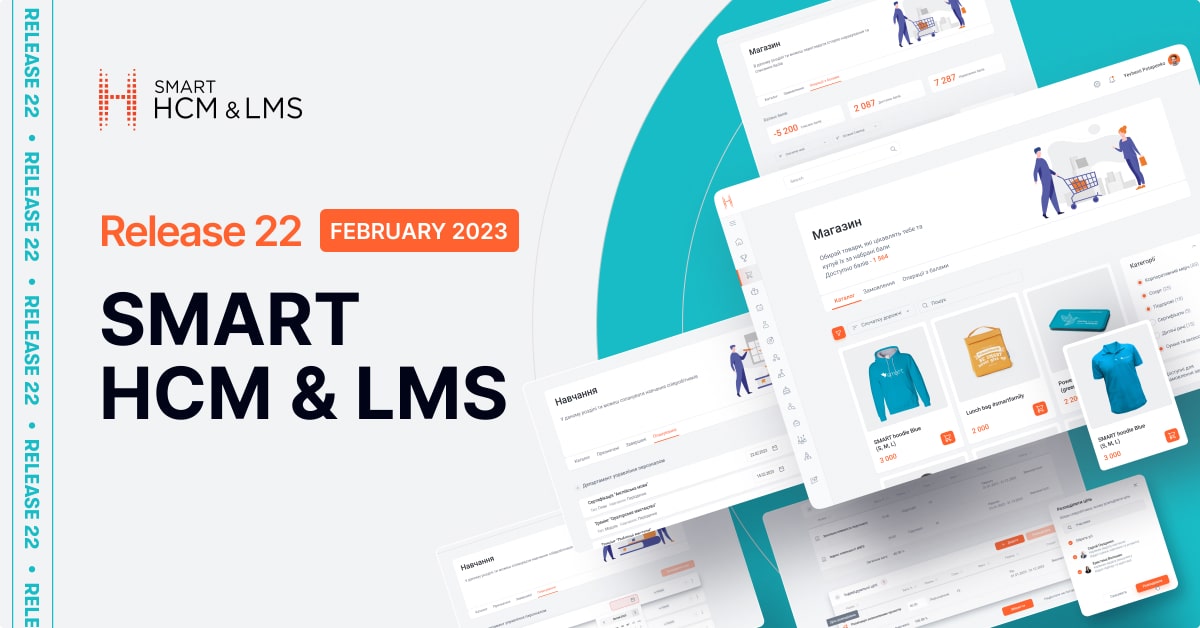
To demonstrate how modern technology transforms HR processes in practice, let’s take a closer look at SMART HCM & LMS by SMART business. Built on Microsoft technologies, the solution provides the flexibility, integration capabilities, and scalability needed to support HR processes across the corporate IT ecosystem. As an official Microsoft partner, SMART business designed the platform for organizations seeking to automate employee lifecycle management and make HR processes more transparent and efficient. This is made possible through a comprehensive set of integrated modules.
SMART HCM & LMS Recruiting Module: Finding and attracting top talent
The Recruiting module includes vacancy management, high-volume recruiting, resume parsing from multiple sources, an AI assistant for resume screening and interview preparation, and automated candidate communication throughout the hiring process. This enables HR teams to build talent pipelines more efficiently while automating routine communication.
Impact on the employee lifecycle: The Recruiting module directly supports the talent acquisition stage. For example, automated job posting and application processing reduce time-to-fill. Candidates receive timely responses and clear communication, while HR professionals spend far less time manually reviewing resumes. As a result, companies reduce the risk of losing strong candidates to competitors because of hiring delays while improving hiring quality through recruitment channel analytics that identify the most effective talent sources.
Onboarding Module: Faster employee integration with less HR effort
The SMART HCM & LMS Onboarding module automatically assigns personalized onboarding plans based on each employee’s role, including presentations, guidelines, videos, and knowledge assessments. New hires receive access to onboarding materials before their first day, while managers and mentors can monitor progress in real time. Clear guidance and structured support reduce uncertainty for new employees and help organizations minimize the risk of early turnover.
Impact on the employee lifecycle: This module supports the onboarding stage by accelerating time to productivity and increasing employee engagement. For example, when new hires receive their onboarding plan before their first day, they arrive with a clear understanding of their responsibilities and immediate access to the resources they need. This significantly reduces the stress and uncertainty that often accompany the first few weeks in a new role.
E-learning Module: Continuous learning and strategic employee development
The E-learning module enables organizations to align employee training with their strategic business objectives. The system helps identify hard and soft skill development needs, create personalized learning paths, and build a centralized knowledge base. It provides 24/7 access to learning materials, supports multiple languages, and accommodates a variety of content formats, including videos, audio files, PDFs, and more. By taking a structured approach to learning, companies provide employees with clear development paths. This reduces fragmented training efforts, increases employee motivation, and allows HR teams to easily monitor learning progress within the system.
Impact on the employee lifecycle: The E-learning module supports the employee development and learning stage. For example, when employees receive personalized learning plans with clear deadlines and convenient access to training materials, they can steadily build both technical (hard) and interpersonal (soft) skills. This gives them a greater sense of progress and confidence in their abilities. As a result, employees become more productive in their current roles, while the organization develops a workforce aligned with its strategic goals. This approach can also improve employee engagement and retention by demonstrating the company’s ongoing commitment to professional development. For employees seeking career advancement, the LMS component of the platform provides a transparent framework where completed training and acquired competencies serve as tangible evidence for promotions, internal mobility, or expanded responsibilities.
Performance Management: Goals, performance evaluation, and continuous development
Goal Setting Module
The Goal Setting module enables organizations to align individual employee objectives with broader business goals. The system supports monthly, quarterly, and annual goal setting, as well as employee self-assessments. When employees have clearly defined goals and KPIs, they better understand how their work contributes to the organization’s overall success. This reduces uncertainty and increases motivation.
Impact on the employee lifecycle: The Goal Setting module directly supports the performance management stage by helping identify performance gaps and enabling timely adjustments to employee development and performance plans.
Manager’s Portal
Managers have access to real-time insights into the performance of individual employees and their teams. The portal enables them to create personalized development plans, monitor employee progress, and submit recruitment requests when staffing needs arise. Real-time analytics allow managers to identify issues quickly and make informed decisions based on data rather than assumptions.
Impact on the employee lifecycle: The Manager’s Portal supports both the performance management and employee retention stages by providing leaders with the visibility they need to proactively address issues and make evidence-based decisions.
Employee Performance Assessment Module
The Employee Performance Assessment module automates recurring performance reviews using 90-, 270-, and 360-degree feedback methodologies, as well as goal-based evaluations. It creates a transparent view of employee competencies while providing objective, structured feedback. Regular assessments highlight both strengths and areas for improvement, giving employees clear direction for their professional growth.
Impact on the employee lifecycle: The module supports the performance management stage by fostering a culture of continuous feedback and ongoing development.
Want to learn how these and other SMART HCM & LMS modules, together with AI-powered HR tools, can help your organization optimize employee lifecycle management? Contact us today to schedule a consultation with SMART business experts.
FAQ: Frequently asked questions about HCM systems
What’s the difference between an HRIS (Human Resource Information System) and an HCM (Human Capital Management) system?
The main difference lies in the scope of functionality. An HRIS primarily focuses on storing and managing employee records and administrative HR data. An HCM system, on the other hand, supports the entire employee lifecycle — from recruiting and onboarding to learning, performance management, and employee retention.
What’s the difference between an HRMS and an HRIS?
An HRIS is mainly designed for maintaining employee records and handling core HR administration. An HRMS (Human Resource Management System) offers a broader range of HR capabilities, such as time and attendance tracking, payroll, and basic performance management. In practice, the terms are often used interchangeably, although HRMS generally refers to a more feature-rich solution.
Which HCM system is best for HR management?
The best HCM system is one that combines recruiting, employee development, performance management, workforce analytics, and seamless integration with the rest of your business systems. For example, SMART HCM & LMS automates key HR processes within a single platform — from recruiting and onboarding to learning, goal management, and performance analytics. Built on Microsoft technologies, the platform is highly scalable and easily integrates with the broader Microsoft business ecosystem, creating a unified digital environment for managing your organization.
How do you implement an HCM system?
Implementing an HCM system typically involves the following steps:
- Assess your current HR processes to identify what’s working well and where improvements are needed. This helps understand where the system can bring the biggest value.
- Define your key HR metrics, such as time-to-fill, employee turnover, or learning effectiveness.
- Choose the right HCM platform based on your company’s size, integration requirements, and functional needs.
- Configure the required modules, starting with core capabilities such as Recruiting, Onboarding, and Performance Management, then expanding over time.
- Train your HR team to ensure they can fully leverage the platform’s capabilities.
- Enable HR analytics to support data-driven decisions regarding recruiting, onboarding, learning, and employee performance.
- Measure outcomes and continuously improve by regularly evaluating whether the system is meeting your objectives and refining configurations as business needs evolve.
How do you add a Recruiting module to an HCM system?
In modern HCM platforms such as SMART HCM & LMS, the Recruiting module is typically integrated with the rest of the HR ecosystem. Once a candidate accepts an offer, their information is automatically transferred into their employee profile, ensuring seamless data continuity from the very first interaction with the candidate through onboarding and beyond.