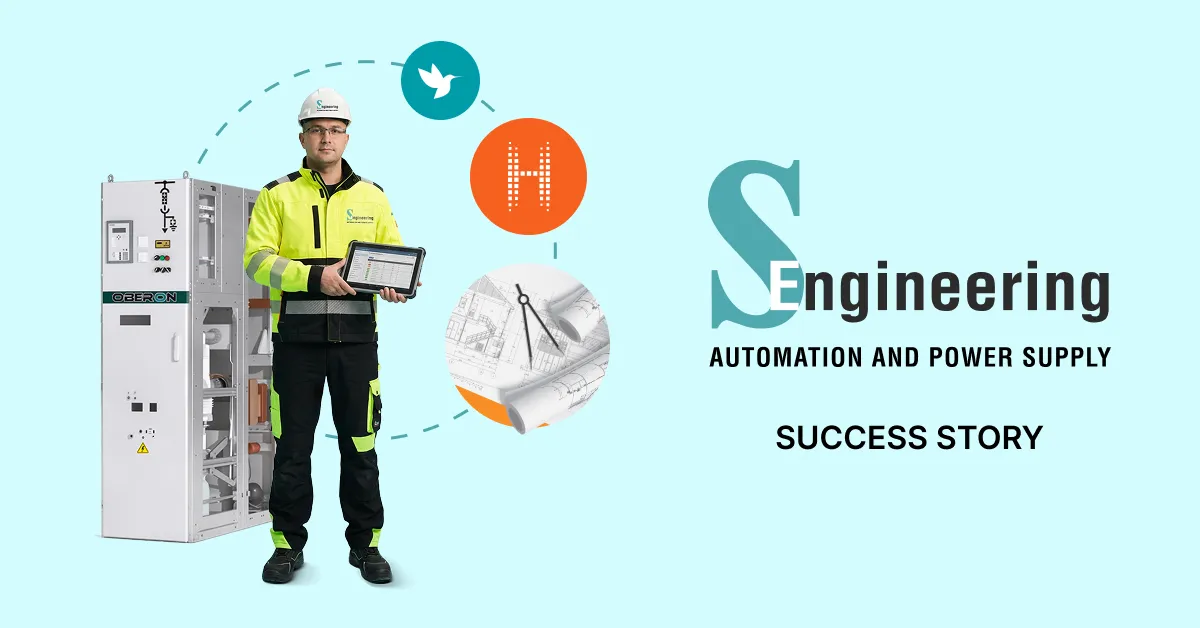
S-Engineering is a trusted link in the global supply chain, serving customers across Ukraine, Poland, Austria, Spain, Bulgaria, Romania, the Czech Republic, Kazakhstan, Algeria, the UAE, Saudi Arabia, as well as countries in South America and Southern Africa. The company’s portfolio includes its proprietary high-tech products — SENUMAC, SENUVOL, and OBERON — as well as localized technologies from global industry leaders, integrated into comprehensive solutions for customers. By combining advanced engineering software (Wrike, EPLAN, AutoCAD, and SolidWorks), a rigorous product quality assurance process, and a well-balanced pricing strategy, S-Engineering consistently meets international technical standards.
However, S-Engineering’s success is driven by more than just cutting-edge technology. The company positions itself as a socially responsible employer, recognizing that long-term stability begins with its people. S-Engineering actively invests in multi-level employee training, internship and mentorship programs, partnerships with universities, and the establishment of educational laboratories.
To support the continued development of its HR function, S-Engineering launched the implementation of SMART HCM & LMS. In this case study, we explore how the company approached its HR transformation and the results achieved through its partnership with SMART business.
Competency assessment: Where S-Engineering’s HR optimization journey began
S-Engineering’s HR transformation started with a clear and practical objective: to streamline competency assessment across its project teams. The company needed a solution that would allow employees to evaluate their own performance while also providing feedback to colleagues working alongside them on shared projects. The goal was to implement a comprehensive 360-degree feedback model, where managers’ evaluations are complemented by feedback from team members who collaborate directly in day-to-day operations.
Another key requirement was to simplify performance management for geographically distributed teams. S-Engineering needed a solution that would allow employees to complete assessments regardless of their location or device — not only from a desktop computer but also via smartphone. This was particularly important for project teams working across multiple countries and time zones.
Before implementing SMART HCM & LMS, employee assessments were conducted manually using spreadsheets and questionnaires. This approach presented several challenges:
- Spreadsheets did not provide sufficient visibility into the process. It was difficult to track who had already completed a survey and who had not, particularly in anonymous surveys.
- The lack of automation increased the risk of errors and incomplete or inaccurate responses.
- The assessment process required continuous involvement from the HR team at every stage, consuming valuable administrative resources.
As a result, S-Engineering set out to fundamentally redesign its approach to employee surveys by implementing a flexible, automated, and user-friendly solution.
Why SMART HCM & LMS was chosen
During the selection process, the S-Engineering team evaluated several HR platforms. The deciding factor was the ability to flexibly adapt the system to the company’s specific business requirements, particularly employee survey processes. SMART HCM & LMS was ultimately selected because it enables phased implementation of functionality and allows HR processes to scale in line with the company’s evolving priorities.
Rather than attempting to digitize every HR process at once, S-Engineering deliberately focused on the solutions that would deliver the greatest immediate business value. The following SMART HCM & LMS modules were implemented during the first phase:
- Human Capital Management (HCM) — to create a unified HR environment and structure employee data.
- Talent Statuses — to establish the foundation for competency and talent management.
- Knowledge Base — to centralize internal company documentation and provide employees with easy access to information.
- Goal Setting — to align individual employee objectives with the company’s strategic goals.
- Employee Assessment — to support employee surveys and structured feedback collection.
At the current stage, the company actively uses the survey and employee assessment functionality. When the project was launched, approximately 300 specialists were included in the assessment process, with around 240 employees regularly participating in surveys. The remaining SMART HCM & LMS modules are currently laying the foundation for the company’s future integrated HR ecosystem.
This phased approach enabled S-Engineering to begin the digitalization of its HR processes in a controlled manner, test different usage scenarios, gather employee feedback, and gradually expand the system’s functionality in line with real business needs.
Moving forward: How the S-Engineering team is adopting the new solution
Today, all project managers at S-Engineering actively use SMART HCM & LMS, while some employees are still in the process of adapting to the system. This is largely due to the transition from familiar tools to a new digital environment, where processes have become more structured and controlled. The company understood from the outset that replacing tools employees had used for years with an entirely new system would come with its own challenges. That is why the implementation team placed a strong focus on supporting employees throughout the adoption process.
People always come first. If one of my colleagues reaches out with a question about a system that’s new to them, I put everything else aside and focus on helping them — even if I’m in the middle of a complex technical task. My responsibility is to build employees’ trust not only in new technologies — in this case, SMART HCM & LMS — but also in the company itself.

To make the transition easier, the Knowledge Base module was introduced first, allowing employees to access the company’s internal information in a structured format. At the same time, the HR team actively encouraged employees to engage with the system by updating their personal information, working with internal materials, and submitting suggestions. This became the first step toward building a habit of using the platform and accepting it as part of everyday work. As a result, the system already serves as a unified digital workspace for employees.
Implementation challenges and how the company addresses them
As is often the case with transformation projects, hands-on use of the system provided a deeper understanding of its functionality and future potential. As the project progressed, the team gradually refined its approach to designing survey questions and assessment scenarios to ensure they best supported the company’s business needs. This stage made it possible to gather valuable user feedback and establish a solid foundation for future development and customization.
Project managers and the executive team played a significant role during implementation by participating directly in configuring the solution’s usage scenarios. In some cases, this required additional time and the development of custom approaches. Thanks to the active involvement of both teams, the project was successfully delivered on schedule without disrupting the day-to-day operation of key HR processes.
According to the S-Engineering team, another key factor behind the project’s success was the quality of collaboration with the SMART business implementation team.
The implementation was completed quickly and professionally. Support was available virtually 24/7, and the SMART business specialists proved to be experienced and empathetic business partners. Their level of expertise allowed us to overcome unexpected challenges very quickly.
“The best is yet to come”: How the system works today and where S-Engineering’s HR transformation is headed
At this stage, S-Engineering is using only part of the full SMART HCM & LMS functionality — and this is a deliberate decision aimed at ensuring high-quality system adoption and integration across the organization. The company views implementation as an ongoing transformation process, where gradually establishing a new culture of working with HR tools is essential. For this reason, additional functional modules will be introduced step by step.
How SMART HCM & LMS modules are already being used at S-Engineering:
- Knowledge Base became the first SMART HCM & LMS module to be actively adopted. It enabled the company to centralize corporate information by bringing together policies, instructions, working materials, and useful links into a single space accessible to all employees. The module was introduced internally through a dedicated presentation to encourage employees to use the portal as their primary source of up-to-date information.
- Employee onboarding and adaptation have also improved, as the portal has become a single, intuitive entry point into the company’s working environment. New employees can quickly familiarize themselves with key processes, find answers to common questions, and independently access the information they need. This approach simplifies onboarding, makes the process more consistent, reduces reliance on scattered information sources, and helps new hires become productive more quickly.
- Probation period assessments are already conducted within the system, with results stored in a centralized database. This makes the process more transparent while creating a solid foundation for future analysis.
- The employee survey module is currently being rolled out and tested. It is expected to become the foundation for future 360-degree competency assessments. In the future, this functionality will make it possible to collect feedback not only from managers but also from colleagues and project team members. The company expects 360-degree assessments to provide a more comprehensive understanding of employees’ strengths and development areas while serving as the basis for individual learning and development plans.
The next phase of S-Engineering’s HR ecosystem development includes implementing Goal Setting, which will require closer collaboration with teams and the gradual introduction of new approaches to performance management. At the same time, the company notes that even at the current stage, SMART HCM & LMS is already helping improve the transparency, consistency, and manageability of HR processes, creating a solid foundation for the company’s continued digital transformation.
My main piece of advice for companies that are just beginning their digital transformation journey is not to expect that everything can be planned in advance. It’s impossible to anticipate every factor — too much depends on people, processes, and communication. It’s important to view this as part of the journey: only through the implementation process do you gradually develop a clear understanding of how to make the system work most effectively for your organization. And the moment when all the modules start working together and deliver tangible results becomes the best confirmation that your efforts were worthwhile.
For many years, the SMART business team has been helping companies across a wide range of industries optimize their HR processes — from manufacturing and logistics to retail and aviation. The company’s clients include SkyUp, Nemiroff, Nova Post, Darnytsia, CFG, and many other organizations where HR is recognized as a strategic business partner.
This experience has enabled the SMART team to develop an approach based on a deep understanding of each client’s HR processes. The vendor goes beyond simply implementing a solution — it helps establish the logic of interaction between different HR functions, creating a unified digital HR ecosystem.
We are pleased that SMART HCM & LMS has become part of S-Engineering’s HR transformation journey — a company with a complex organizational structure, project-based teams, and high standards for process quality. This case is particularly illustrative for us: even by using only a few modules from the platform’s full functionality, the team is already seeing how the system helps centralize information, improve the transparency of HR processes, and gradually build a unified digital workspace for employees. Projects like this clearly demonstrate the value of SMART HCM & LMS. Rather than simply automating individual tasks, the solution creates a solid foundation for the further development of an HR ecosystem — from onboarding and employee evaluation to goal setting, competency development, and more mature talent management.

If you’re looking to build an effective HR ecosystem, submit a request, and the SMART business experts will help you find a solution that perfectly matches your company’s needs.